
A Beginner's Guide to Food Labelling Regulations in the UK (2026 Update)

Disclaimer: While GoVisually strives to convey accurate information, please refer to the relevant official website for the most up-to-date guidelines on food, safety, and labeling.
For any Consumer Packaged Goods (CPG) brand operating in the United Kingdom, understanding food labelling regulations is not just a legal formality, it's a cornerstone of consumer trust, market access, and brand integrity. The UK's regulatory landscape, shaped by both retained EU law and post-Brexit adjustments like the Windsor Framework, can be complex, especially for newcomers. Errors can lead to costly product recalls, fines, and significant reputational damage. This beginner's guide will demystify the essential rules, helping you ensure your products are compliant and ready for the UK market.
Feeling overwhelmed by complex UK food labelling rules? See how GoVisually streamlines your artwork approval process and keeps you compliant.
The "Golden Rule": Understanding FIC (Food Information to Consumers)
The foundation of UK food labelling lies in the Food Information to Consumers (FIC) Regulation (EU) No 1169/2011, which has been retained in UK law post-Brexit. This regulation sets out the general principles, requirements, and responsibilities governing food information, ensuring consumers receive clear, comprehensive, and accurate details about the food they buy. It covers everything from ingredient lists to nutritional declarations and allergen information.
Key Principles of FIC:
- Mandatory Information: Certain information must always be provided.
- Clarity and Legibility: Information must be easy to understand and read, with minimum font size requirements.
- Non-Misleading: Labels must not mislead consumers, particularly regarding product characteristics, origin, or effects.
The Mandatory 10: What Every UK Food Label Must Show
To comply with FIC regulations, every pre-packed food product sold in the UK must display a specific set of information. Missing even one element can lead to non-compliance. Here are the core mandatory elements:
- Name of the Food: This must be the legal name, or if none exists, a customary name or a descriptive name that clearly identifies the food [1].
- List of Ingredients: All ingredients must be listed in descending order of weight at the time of manufacture. Specific names or INS numbers for additives must also be included [1].
- Allergens: The presence of any of the 14 prescribed allergens (e.g., cereals containing gluten, milk, nuts, soy) must be clearly indicated, often by bolding or highlighting within the ingredients list [2].
- Quantitative Ingredients Declaration (QUID): This specifies the percentage of certain ingredients, especially those highlighted on the packaging or associated with the food's name (e.g., "Pork (80%)" in a pork sausage) [2].
- Net Quantity: The weight or volume of the food (e.g., grams, kilograms, millilitres, litres) must be shown [1].
- Durability Date: This will be either a "Use By" date (for highly perishable foods where safety is a concern) or a "Best Before" date (for foods that maintain quality for longer) [2].
- Storage Conditions/Instructions for Use: Any special conditions for storage or instructions for safe preparation and consumption must be provided (e.g., "Keep refrigerated," "Cook thoroughly") [1].
- Name and Address of the Food Business Operator (FBO): This must be the name and address of the business under whose name the food is marketed. For products sold in Great Britain, this must be a UK address as of January 1, 2024 [2].
- Nutritional Declaration: Mandatory back-of-pack information including energy (kJ/kcal), fat, saturates, carbohydrates, sugars, protein, and salt, typically per 100g/100ml and sometimes per serving [2].
- Alcoholic Strength: For beverages containing more than 1.2% alcohol by volume (ABV) [1].
Post-Brexit Complexity: The Windsor Framework & "Not for EU" Labels

Brexit introduced significant changes to UK food labelling, particularly concerning goods moving between Great Britain (GB) and Northern Ireland (NI). The Windsor Framework, which replaced the Northern Ireland Protocol, aims to streamline this movement but introduces specific labelling requirements.
The "Not for EU" Labelling Mandate:
This requirement is designed to prevent goods destined for Northern Ireland from entering the EU single market via the Republic of Ireland. It is being phased in:
| Phase | Effective Date | Products Covered | Labelling Requirement |
|---|---|---|---|
| Phase 1 | October 2023 | Meat and some dairy products | "Not for EU" individual labelling |
| Phase 2 | October 1, 2024 | All milk and dairy products | "Not for EU" individual labelling |
| Phase 3 | July 1, 2025 | Composite products, unprocessed fruits & vegetables, fish, eggs, honey, and pet food | "Not for EU" individual labelling |
Important Note for GB: While "Not for EU" labelling is mandatory for goods moving into Northern Ireland under the Retail Movement Scheme, the UK government paused its mandatory rollout within Great Britain in late 2024. However, brands must remain vigilant as this could be reinstated if deemed necessary
Allergen Alert: Natasha’s Law and PPDS Requirements
Beyond the general FIC rules, Natasha's Law (officially the Food Information (Amendment) (England) Regulations 2019) introduced crucial changes for Prepacked for Direct Sale (PPDS) foods. This law came into effect following the tragic death of Natasha Ednan-Laperouse and aims to provide greater protection for allergy sufferers.
What is PPDS Food?
PPDS food is any food that is packaged at the same place it is offered for sale to consumers. Examples include sandwiches made on-site and placed in packaging, pre-wrapped salads, or bakery products packaged before a customer selects them.
Key Requirements under Natasha's Law:
For PPDS foods, businesses must now provide full ingredient lists and allergen information directly on the label. This includes:
- The name of the food.
- A full ingredients list, with allergenic ingredients highlighted.
This significantly increases the burden on businesses preparing food on-site, requiring robust systems for ingredient management and labelling.
The Hidden Cost of Manual Review: Why Your Compliance Workflow Needs an Upgrade
Navigating the intricate web of UK food labelling regulations—from FIC and QUID to post-Brexit FBO addresses and Natasha's Law—is a monumental task. Many CPG brands still rely on manual processes: email chains, shared drives, and endless rounds of feedback on packaging artwork. This approach is not only inefficient but also fraught with risks:
- Version Control Nightmares: Losing track of the latest approved artwork can lead to costly reprints or, worse, non-compliant products reaching shelves.
- Delayed Time-to-Market: Slow approval cycles mean missed deadlines and lost revenue opportunities.
- Increased Risk of Errors: Manual checks are prone to human error, leading to fines, product recalls, and damage to brand reputation.
- Lack of Audit Trail: Proving due diligence during an inspection is nearly impossible without a clear record of every review and approval.
In today's fast-paced and highly regulated environment, a modern solution is essential to mitigate these risks and ensure seamless compliance.
Is your current packaging approval process slowing you down? Request a demo of GoVisually to see how you can accelerate compliance and reduce errors.
GoVisually: Your Safety Net for UK Compliance Workflows
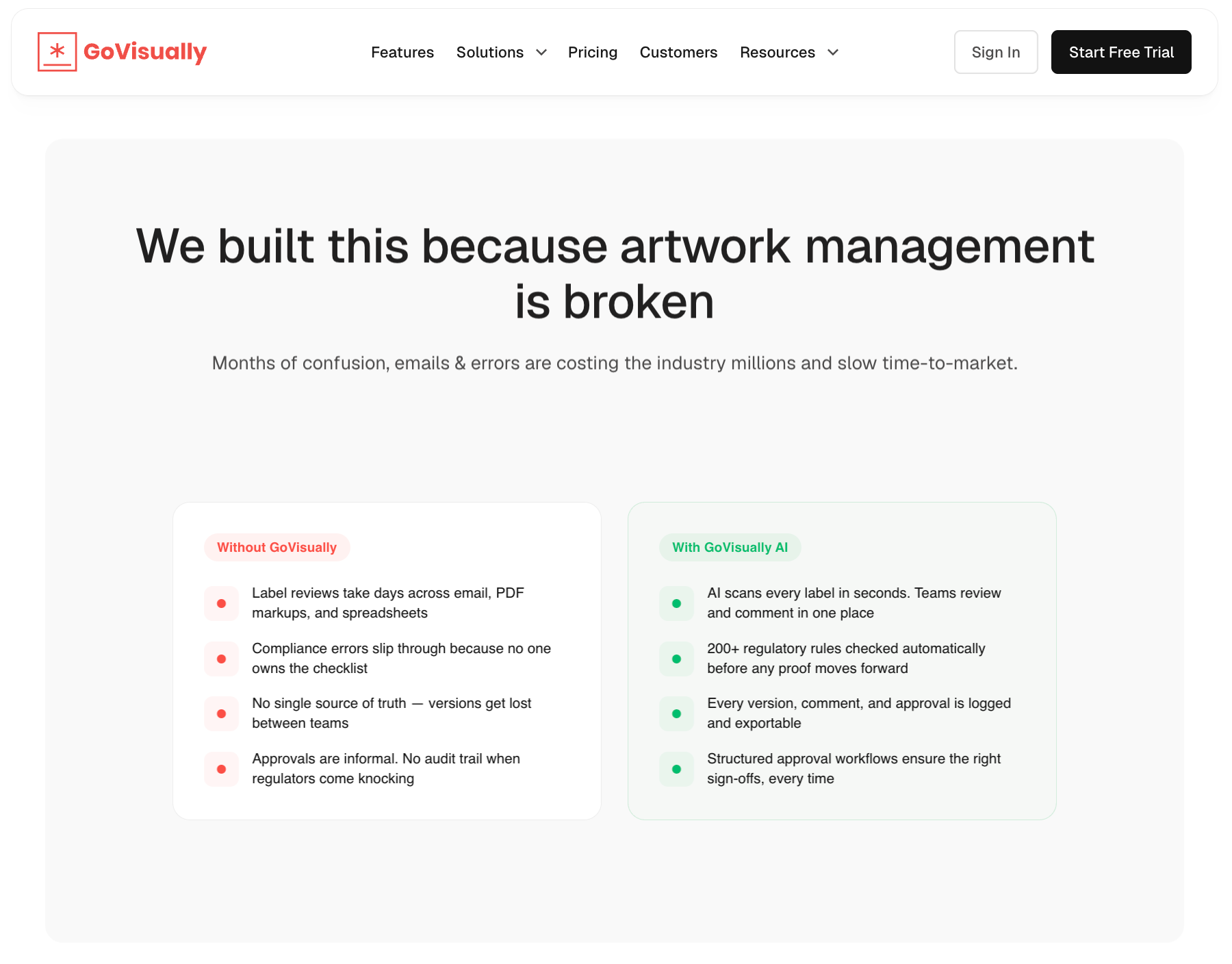
GoVisually offers a robust, intuitive platform designed to streamline the packaging artwork review and approval process, making it an invaluable tool for CPG brands grappling with UK food labelling regulations. By centralizing feedback, automating workflows, and maintaining comprehensive audit trails, GoVisually transforms compliance from a headache into a competitive advantage.
How GoVisually Ensures Seamless UK Food Labelling Compliance?
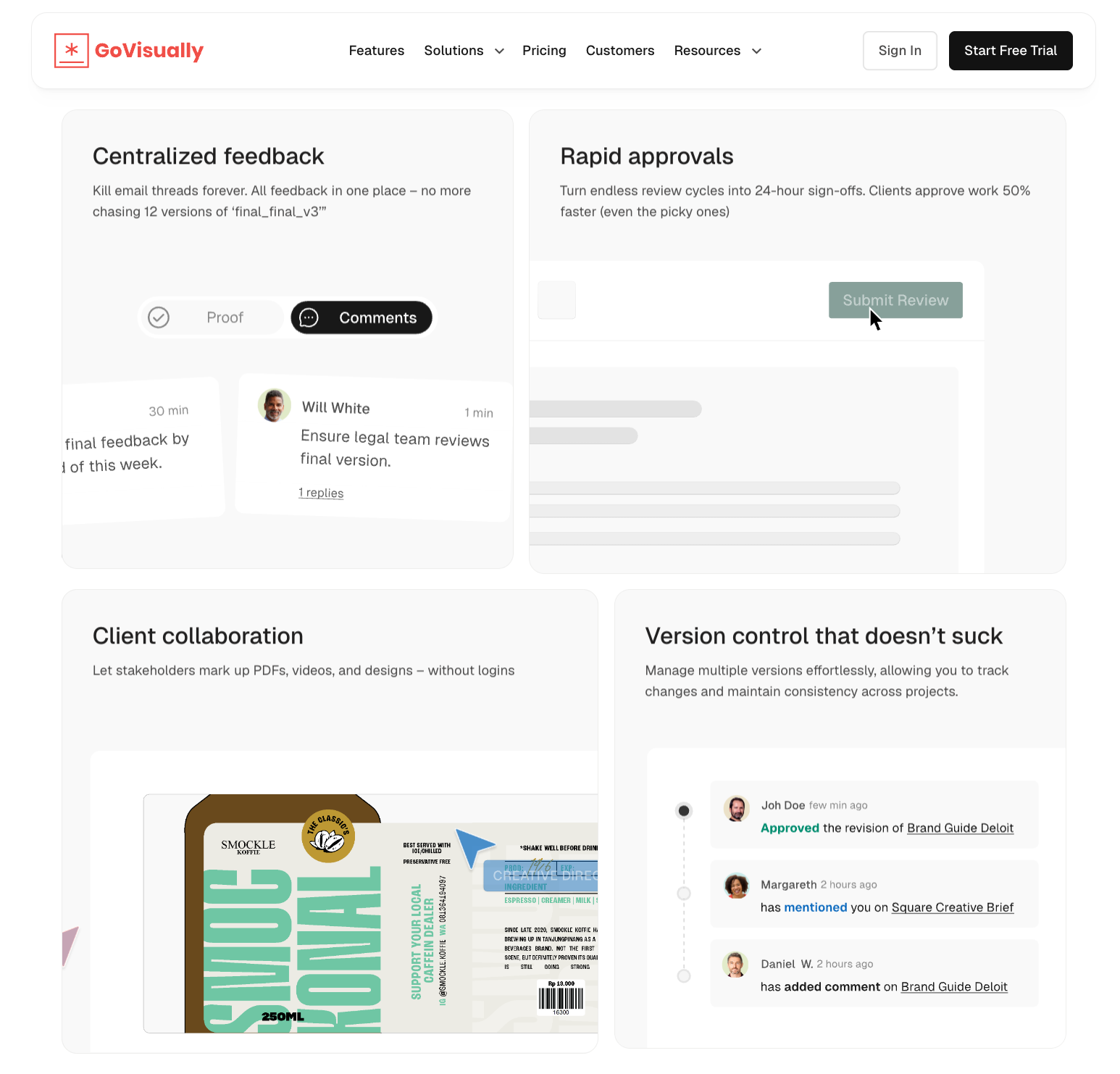
- Centralized Artwork Review: All stakeholders—from legal and regulatory teams to marketing and design can review and annotate packaging artwork directly within a single platform. This ensures all mandatory elements, allergen declarations, and FBO addresses are correctly placed and formatted.
- Automated Workflows & Version Control: Set up custom approval workflows to ensure every label passes through the necessary checks. GoVisually automatically tracks all versions and feedback, providing a clear audit trail that is essential for demonstrating compliance during inspections.
- Reduced Errors & Faster Approvals: By catching errors early in the design phase and accelerating feedback loops, GoVisually significantly reduces the risk of non-compliant packaging reaching production. This means fewer costly reprints and quicker time-to-market.
- Simplified Collaboration: Whether you're dealing with FIC, Natasha's Law, or the nuances of the Windsor Framework, GoVisually facilitates seamless collaboration, ensuring everyone is working from the latest, approved artwork.
Don't let complex regulations hinder your brand's growth. Empower your team with GoVisually to navigate the UK food labelling landscape with confidence and efficiency.
Ready to simplify your UK food labelling compliance? Start your free trial with GoVisually today and transform your packaging approval process.
FAQ: Your Quick Guide to UK Food Labelling for Beginners
What is FIC and why is it important for UK food labels?
FIC (Food Information to Consumers) is the foundational regulation governing food information in the UK, ensuring consumers receive clear, accurate, and comprehensive details about food products.
What is Natasha's Law and who does it apply to?
Natasha's Law requires full ingredient lists and allergen information to be provided directly on the label for all Prepacked for Direct Sale (PPDS) foods, such as sandwiches made on-site.
How has Brexit affected UK food labelling, especially regarding the Windsor Framework?
Brexit introduced the Windsor Framework, which mandates "Not for EU" labelling for certain products moving from Great Britain to Northern Ireland. FBO address requirements also changed, requiring a UK address for products sold in GB.
Do I need to show a "Use By" or "Best Before" date?
"Use By" dates are for safety (highly perishable foods), while "Best Before" dates relate to quality. It's a criminal offence to sell food past its "Use By" date.
How can GoVisually help my CPG brand with UK food labelling compliance?
GoVisually centralizes packaging artwork review, automates workflows, and maintains audit trails, helping CPG brands ensure all mandatory elements, allergen declarations, and FBO addresses are correct, reducing errors and accelerating approvals.