
California SB 343: What CPG Brands Need to Fix Before the October 2026 Recycling Label Deadline

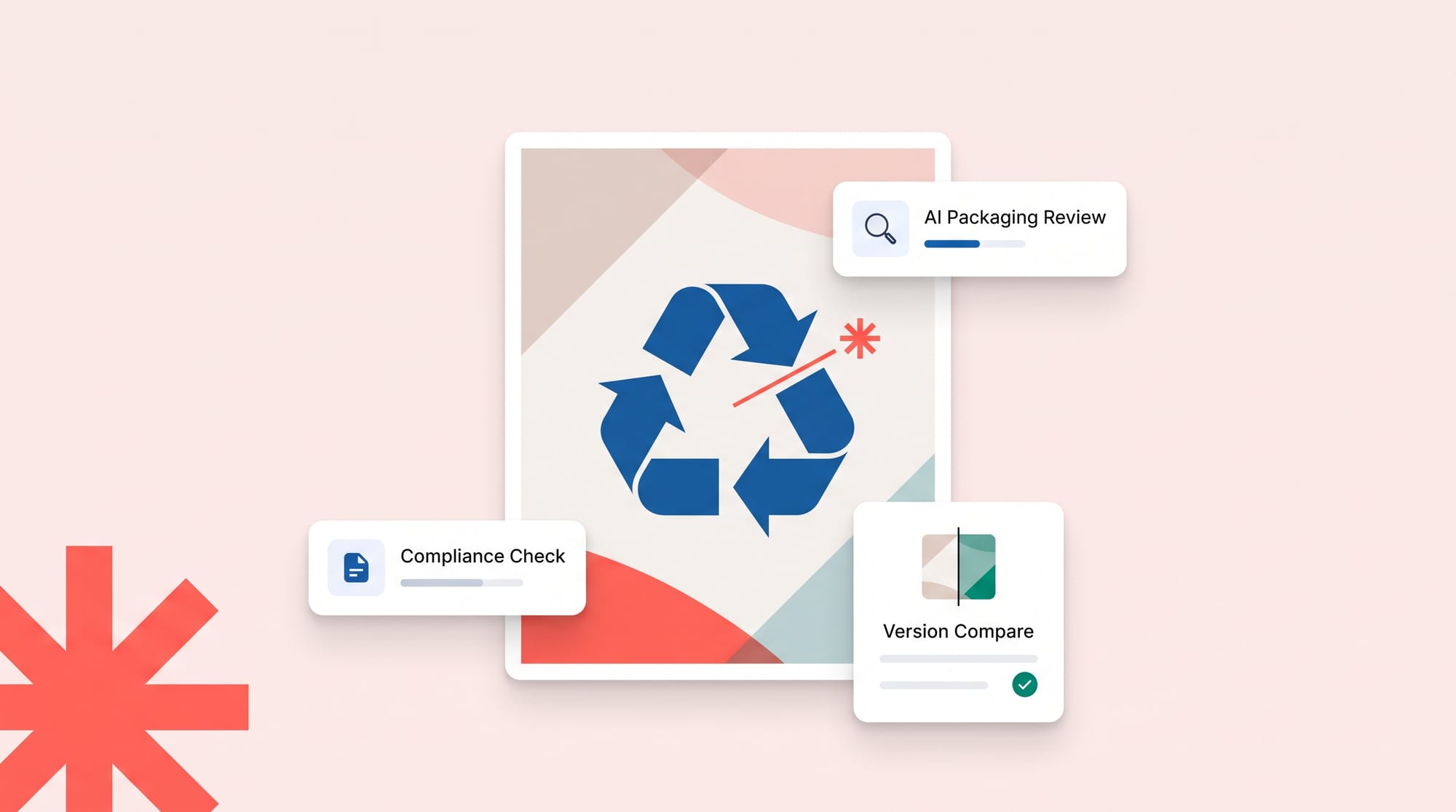
California SB 343, often called the Truth in Recycling or Accurate Recycling Labels law, fundamentally changes how brands communicate sustainability. It restricts the use of the chasing arrows symbol, written recyclability claims, and consumer recycling instructions on products and packaging sold in California.
The Critical Compliance Deadline
The key date for every CPG brand is October 4, 2026.
- Manufacturing Date Rule: The restrictions apply to products and packaging manufactured after this date.
- No Sell-Through Grace Period: Unlike some regulations that focus on the sale date, SB 343 focuses on the moment of production.
- The 18-Month Clock: This deadline was triggered by CalRecycle’s publication of final material characterization findings in April 2025.
Why This Is More Than Just an Icon Change?
For brands, the risk goes far beyond removing a familiar recycling logo. SB 343 treats recyclability indicators as potentially deceptive unless the packaging meets strict statutory criteria.
- Statewide Infrastructure: Materials must meet specific collection and sorting thresholds across California.
- Product-Specific Design: Even if a material is recyclable, the specific package design (inks, adhesives, labels) must not interfere with the process.
- Integrated Workflow: Label reviews must now connect packaging artwork, material specifications, and regulatory documentation in one defensible system.
Quick Reference: SB 343 Compliance at a Glance
Key question | Short answer |
What is regulated? | Chasing arrows symbols, recyclability statements, and any instructions implying an item is recyclable. |
When is the deadline? | October 4, 2026 (for all products manufactured after this date). |
What is the test? | A "60/60" infrastructure test: 60% population collection access and 60% facility sorting access. |
Who decides? | Manufacturers are responsible for their own claims; CalRecycle provides the data but not the "pass/fail" for individual labels. |
What is the first step? | Build a SKU-level inventory of every recyclability claim and map it to its specific material type. |
What SB 343 Actually Requires?
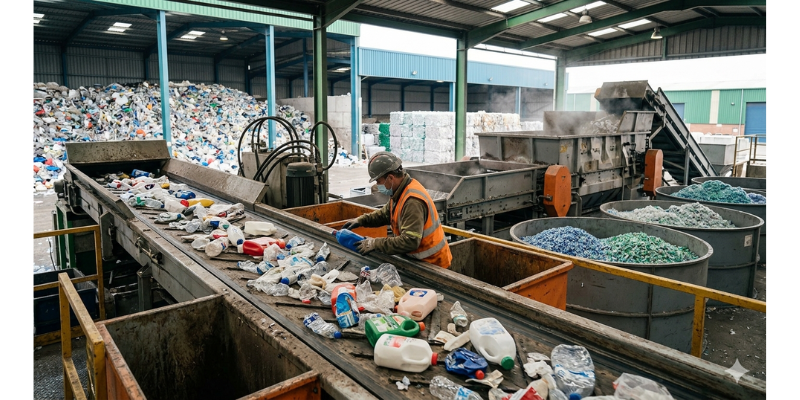
The law prohibits any person from selling or distributing products with deceptive or misleading recyclability claims. Under the Public Resources Code, several common indicators are now under scrutiny.
Indicators Now Deemed "Deceptive" Unless Proven Otherwise
If your packaging does not meet the new recyclability criteria, the following elements are considered misleading:
- The Chasing Arrows Symbol: The standard three-arrow loop.
- Resin Identification Codes: Symbols where the resin number is placed inside a chasing arrows triangle.
- Written Statements: Phrases like "100% Recyclable" or "Recycle Me."
- Consumer Directions: Instructions like "Please Recycle" or "Check Locally."
The Documentation Mandate
California’s environmental advertising rules require businesses to maintain written records that support any environmental claim.
- Evidence-Based Labeling: You must be able to produce documentation showing how your package meets the statutory criteria.
- Audit Readiness: For brands with large SKU portfolios, this transforms label compliance from a design task into a cross-functional documentation project.
The "60/60" Infrastructure Test Explained
The core of SB 343 is an infrastructure-based test. A material is only considered "recyclable in the state" if it meets two primary thresholds.
1. The Collection Threshold
The material type and form must be accepted for collection by local recycling programs that collectively serve at least 60% of California’s population.
- This means a material isn't "recyclable" just because one city accepts it; it must be widely accepted across the state.
2. The Sorting Threshold
The material must be sorted into defined streams by processing facilities that collectively serve at least 60% of statewide recycling programs.
- Collection is only half the battle. If a material is collected but then pulled out as "residue" or "contamination" at the sorting facility, it fails the test.
3. Design and Composition Limits
Even if a material passes the infrastructure test, the specific package must be designed correctly.
- Adhesives and Inks: Certain glues or metallic inks can render a recyclable material non-recyclable.
- PFAS and Chemicals: The presence of certain intentionally added chemicals can disqualify a package from being labeled as recyclable.
Which Packaging Materials Are Most at Risk?
Brands should avoid making broad assumptions based on material families like "plastic" or "paper." Instead, they must look at the specific material type and form.
High-Priority Categories for Audit
The following formats commonly face challenges meeting the SB 343 criteria:
- Flexible Plastics: Pouches, stand-up bags, and film overwraps often fail sorting thresholds.
- Multilayer Materials: Packaging that laminates plastic, foil, and paper together is difficult for standard facilities to process.
- Coated Fiber: Paperboard with plastic or wax coatings (common in food service) may be rejected by paper mills.
- Small-Format Items: Items smaller than a certain size often fall through sorting equipment and are treated as waste.
- PVC and Polystyrene: These materials face significant infrastructure gaps in many California jurisdictions.
Generally Safer (But Still Require Verification)
While no material is automatically exempt, the following usually have better infrastructure support:
- Uncoated Cardboard and Paper
- Aluminum and Steel Cans
- Glass Bottles and Jars
- Rigid PET and HDPE Bottles (e.g., standard water bottles or milk jugs)
Enforcement: Understanding the Real Stakes
While the law is complex, the enforcement mechanism is straightforward. Brands that fail to comply face risks from multiple directions.
Statutory Civil Penalties
Local jurisdictions and the California Attorney General can impose civil liability:
- First Violation: $500
- Second Violation: $1,000
- Subsequent Violations: $2,000 per violation
Private Litigation and Class Actions
The law preserves remedies under California’s Unfair Competition Law. This is often the biggest financial risk for SaaS and CPG companies, as it allows for private civil litigation and consumer class action lawsuits based on "misleading" environmental claims.
Retailer Scrutiny
Major retailers are increasingly requiring SB 343 compliance documentation as a condition of shelf placement. A retailer rejection can cause massive supply chain disruption even before a formal government penalty is issued.
A Step-by-Step Audit Workflow for CPG Teams
Compliance is not a one-time project; it’s a repeatable workflow. Here is how leading brands are structuring their SB 343 audits.
Step 1: SKU Inventory and Claim Detection
- Identify every product sold in California.
- Scan every panel of your packaging for symbols, statements, and QR codes.
- Don't forget secondary packaging or promotional inserts.
Step 2: Material Mapping
- Assign each component to a precise material type (e.g., "PET Thermoform" vs. "PET Bottle").
- Document coatings, labels, and adhesives used in the assembly.
Step 3: Statutory Evaluation
- Compare your material types against the latest CalRecycle data.
- Assess the specific design against the APR Design® Guide or other recognized standards.
Step 4: Artwork Remediation
- Flag claims that cannot be substantiated.
- Route updated artwork through legal and regulatory approval.
- Update print files for all manufacturing runs scheduled after October 4, 2026.
How AI-Powered Label Review Accelerates Compliance?
For brands managing hundreds of SKUs, manual review is the biggest bottleneck. This is where a platform like GoVisually transforms the process.
Solving the Operational Burden
Instead of having reviewers manually squint at thousands of PDF files, GoVisually provides the operational infrastructure to:
- Standardize Checks: Automatically surface recycling symbols and statements for human review.
- Centralize Collaboration: Bring regulatory, packaging, and design teams into one shared workspace.
- Ensure Version Control: Compare artwork versions side-by-side to ensure every change was implemented correctly.
- Build an Audit Trail: Maintain a permanent record of every approval and documentation source for future legal defense.
The strongest compliance strategy isn't just about knowing the law—it's about having the tools to execute it perfectly. GoVisually helps teams run a faster, more consistent, and better-documented audit, ensuring you hit the 2026 deadline without missing a single SKU.
FAQ: California SB 343
What is the "Truth in Recycling" law?
It is California SB 343, which prevents brands from using recycling symbols on packaging that isn't actually recycled in practice within the state.
When do I need to have my labels updated?
By October 4, 2026. Any product manufactured after this date must comply with the new labeling rules.
Does this apply to my brand if I'm not based in California?
Yes. If your products are sold, distributed, or imported into California, you must comply with the law.
Can I still use the Resin Identification Code (numbers 1-7)?
Yes, but you cannot put them inside a chasing arrows triangle unless the package meets the full recyclability criteria. A solid triangle or a simple number is often the safer alternative.
What happens if I miss the deadline?
You face civil penalties, potential class action lawsuits, and the risk of retailers pulling your products from their shelves.
Conclusion: Start Your Audit Today
October 2026 may seem distant, but for brands with complex supply chains and large portfolios, the window is closing. Removing a symbol requires artwork revisions, printer coordination, and internal approvals—all of which take time.
The brands that succeed will be those that move away from manual spreadsheets and embrace structured, tool-assisted audit workflows. By organizing your data and automating your review process today, you can turn a major regulatory hurdle into a streamlined part of your packaging lifecycle.
Ready to streamline your compliance? Book a demo with GoVisually to see how our AI-powered label review tools can help your team navigate SB 343 with confidence.