
Custom AI compliance playbooks: What they are and why CPGs need them?

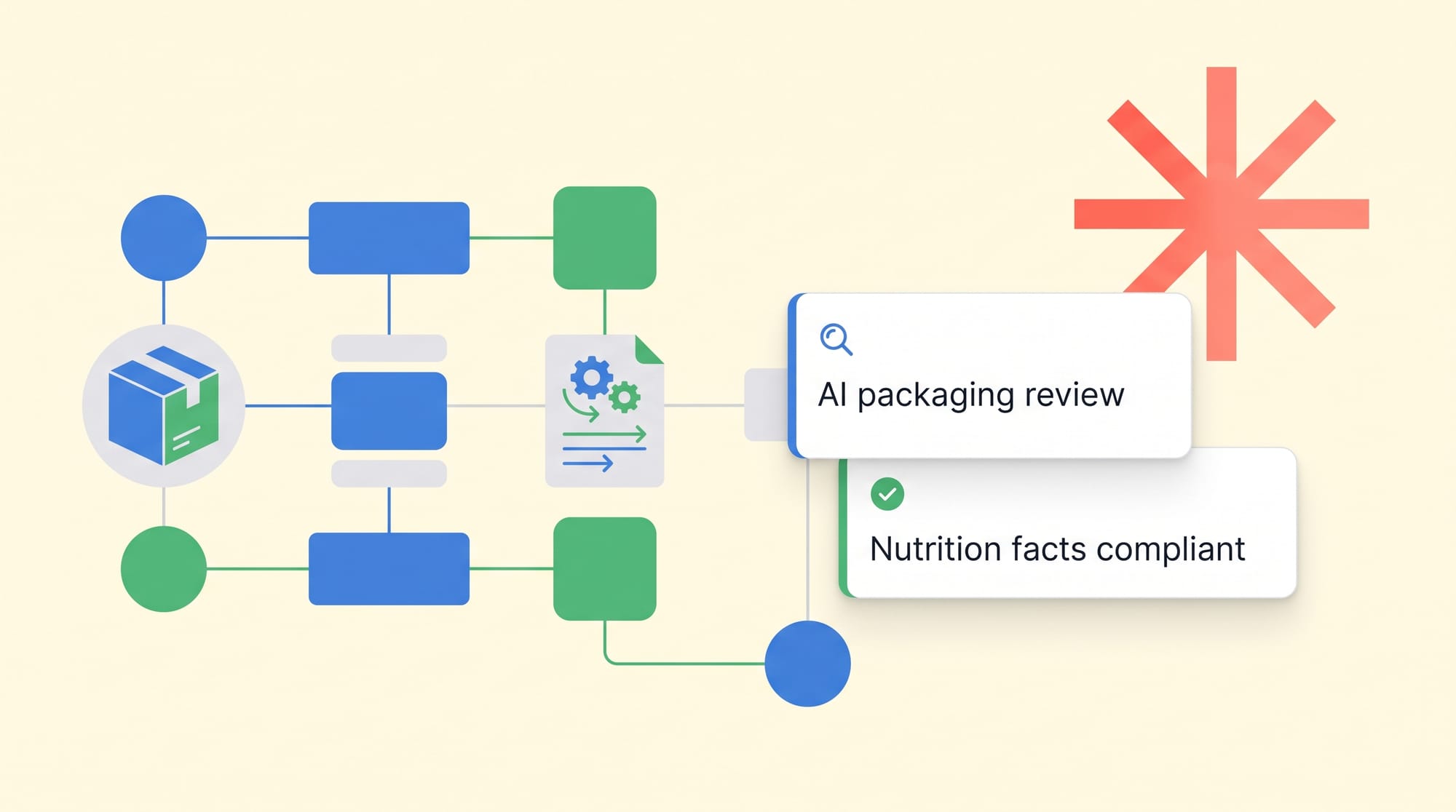
Label errors accounted for 45.5% (192 of 422) of US food recall events in 2024, and 83.85% of label errors were undeclared allergens — two categories of failure that a structured compliance review should catch every time. For CPG companies managing dozens or hundreds of SKUs across multiple markets, the uncomfortable truth is that manual label review processes are not failing because teams lack expertise. They are failing because the process itself cannot scale. AI compliance playbooks change that equation.
Key takeaways
- An AI compliance playbook is an automated, multi-step workflow that sequences multiple compliance checks — regulatory, brand, print readiness — without manual initiation between steps.
- Labeling errors and undeclared allergens accounted for 20% of the 50 most recent FDA recalls analyzed, making automated pre-submission validation a business-critical control.
- Effective playbooks combine AI agents, knowledge bases (brand guidelines, regulatory PDFs), and human-gate checklists — AI handles speed and consistency, humans retain sign-off authority.
- The EU AI Act and California AB 2013 (effective January 1, 2026) are pushing CPG companies to document AI governance, making human oversight and audit trails non-negotiable features of any AI compliance system.
Table of contents
- What is an AI compliance playbook?
- Why manual label review cannot keep pace with CPG complexity
- The anatomy of a custom AI compliance playbook for CPGs
- How to build a playbook that maps to your regulatory reality
- AI governance, accountability, and the human-in-the-loop requirement
- FAQ
- Conclusion
What is an AI compliance playbook?
An AI compliance playbook is a pre-configured, automated workflow that runs a defined sequence of compliance checks against a label, packaging file, or artwork proof, without a reviewer manually initiating each step.
Unlike a simple checklist tool, it uses an intelligence layer: agents read label artwork, interpret regulatory rules, cross-reference brand guidelines, and flag specific violations with citations to the underlying regulation.
The output is a prioritized list of findings, each with a severity rating, exact location on the label, and a suggested remediation, completing in under 30 seconds what would take a compliance team four to eight hours manually.
Here's how AI compliance playbooks help CPG brands specifically:
- Eliminate missed steps — checks fire automatically on file upload; no reviewer needs to remember to run them.
- Enforce multi-market compliance simultaneously — a single playbook can route US labels to FDA checks and EU variants to FIR checks based on conditional logic.
- Standardize review across SKUs — every label in a 200+ SKU portfolio runs through the identical sequence, removing reviewer-to-reviewer variance.
- Accelerate revision cycles — teams that average six to nineteen revision rounds per label can resolve findings before they reach the QA queue.
- Produce a defensible audit trail — every check, finding, and approval decision is timestamped and attributable to a specific user.
- Support regulatory accountability — mandatory human-gate checklists block approval until a qualified reviewer has confirmed critical items, satisfying the human-in-the-loop requirements emerging under the EU AI Act and California AB 2013.
Why manual label review cannot keep pace with CPG complexity?
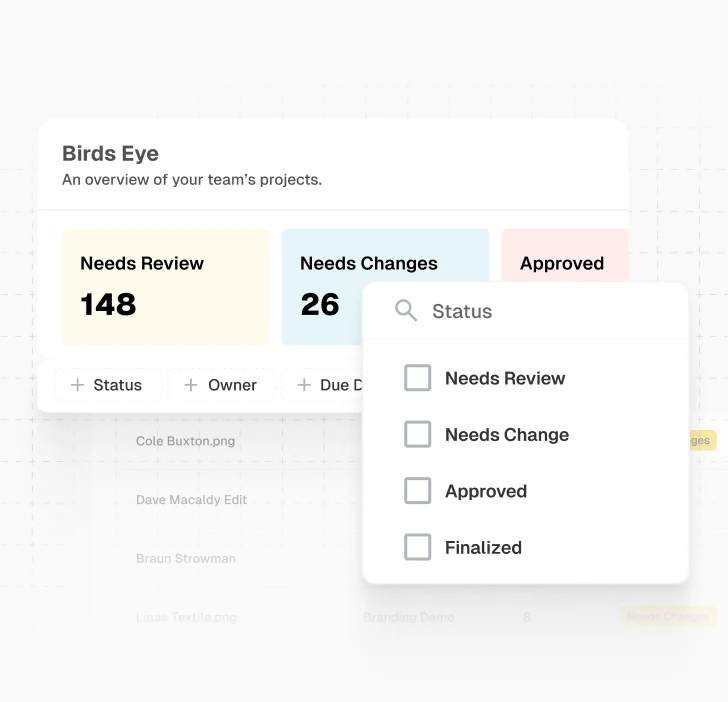
The scale problem is structural
A mid-size CPG company managing 200 SKUs across the US, EU, and Canada must navigate three distinct regulatory frameworks — FDA 21 CFR Part 101, EU Regulation 1169/2011, and Health Canada's Food and Drug Regulations — each with different mandatory fields, font size rules, allergen formats, and language requirements. Add multiple label variants per SKU (retail, foodservice, private label, promotional) plus continuous formula changes, and each revision cycle can run six to nineteen rounds before approval. At that volume, manual review becomes a structural bottleneck — not a resourcing problem you can solve by hiring.
The consequences show up in enforcement data
FDA data from May 2026 shows that of 50 recent recalls analyzed, 27 were Class I — the most serious category, representing a reasonable probability of serious adverse health consequences. Labeling errors and undeclared allergens together accounted for 10 of those 50 recalls (20%). These are not exotic failure modes; they are the predictable output of a review process under sustained pressure.
The D2C channel raises the stakes further
PwC's CPG outlook data notes that AI agents are increasingly mediating consumer purchase decisions, evaluating products based on structured product data and label information. Inconsistent or non-compliant label data no longer just risks a retailer rejection — it affects algorithmic discoverability. Winning CPGs will be those that design AI-readable, structured product information end-to-end. Manual review, by definition, produces inconsistent structured data.
Inconsistency is the hidden failure mode
The most common gap compliance teams discover when mapping their manual process is not a missing step — it is that the same step is executed differently by different reviewers. One QA manager checks allergen declarations against the master formula sheet; another checks against the previous label version. Neither approach is documented, and neither is consistent. A playbook eliminates this variance by codifying exactly which source of truth each check runs against.
The anatomy of a custom AI compliance playbook for CPGs
A production-ready CPG compliance playbook has four structural layers.
Layer 1: The trigger
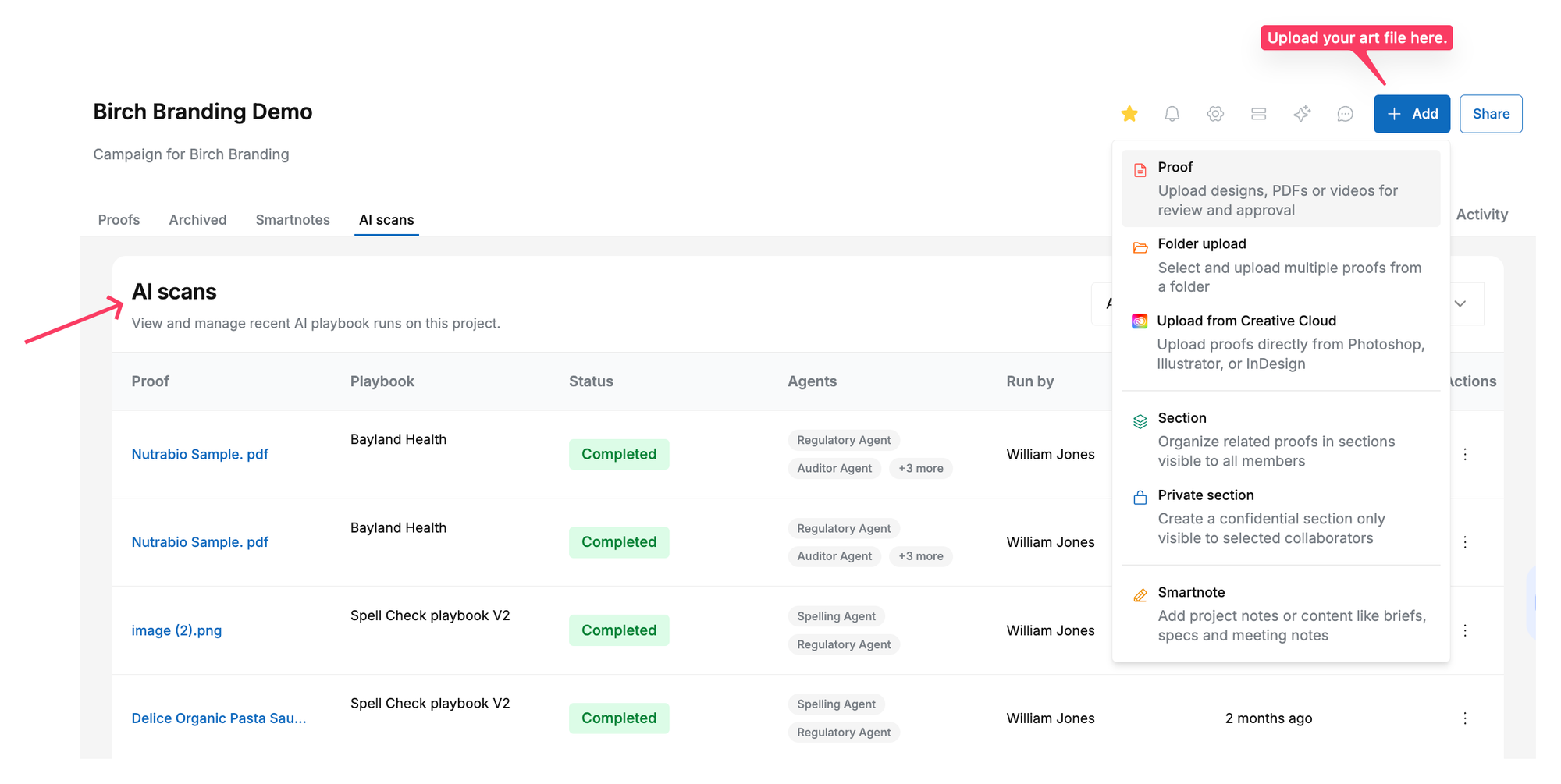
Every playbook starts with an event. In a label review context, the trigger is typically a file upload — a designer submits a new proof and the playbook fires automatically. This eliminates the most common failure point in manual compliance workflows: the review that did not happen because someone assumed someone else had done it.
Layer 2: The agent sequence
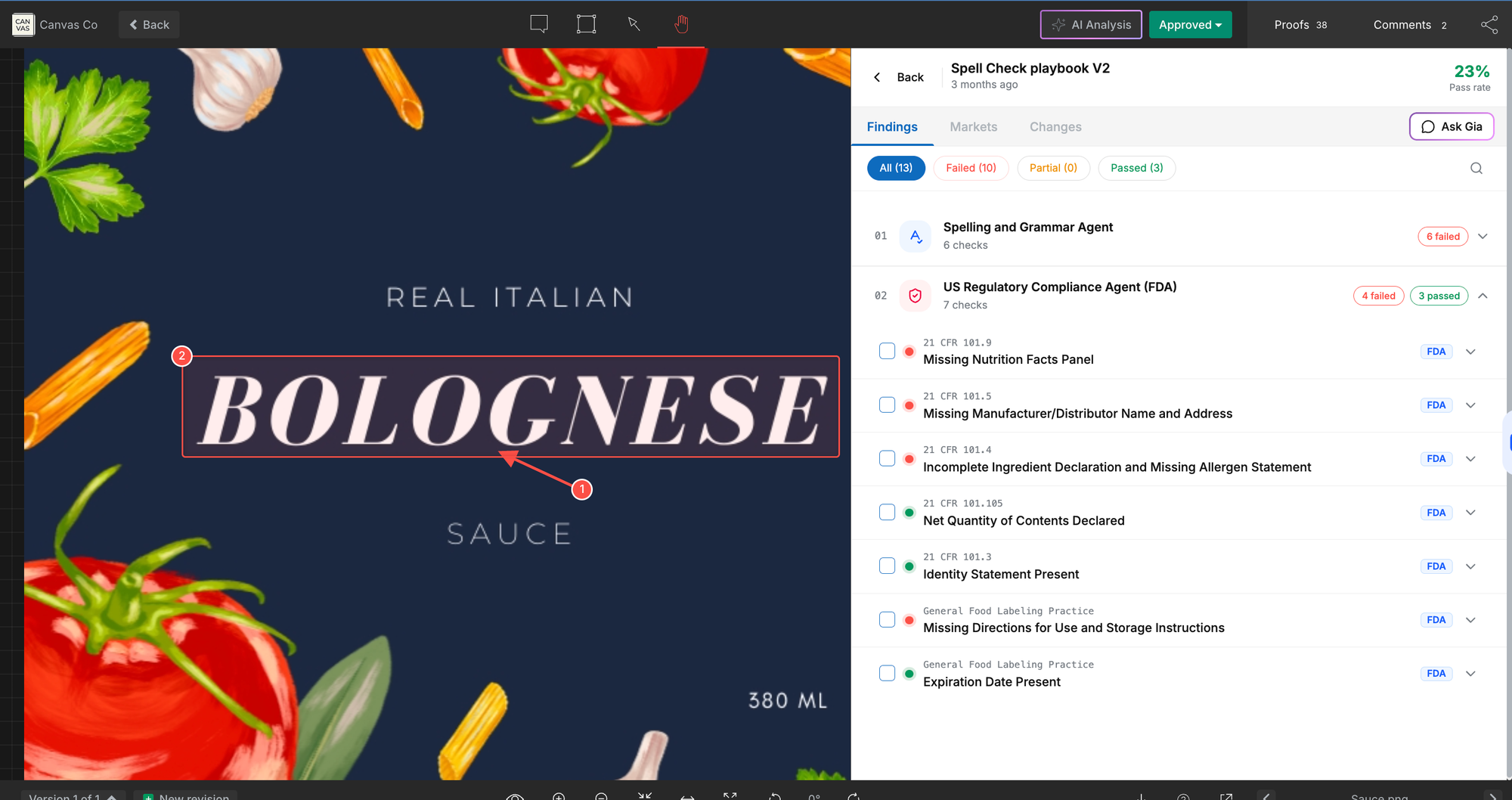
This is the core, an ordered set of AI agents each performing a specific compliance function. Sequence matters: regulatory content checks run before print readiness checks, because there is no point validating bleed and trim on a label with an undeclared allergen. Conditional logic handles edge cases (EU market variants route to the EU Regulatory Agent; US-only labels do not).
In GoVisually's AI Playbooks system, each agent outputs a violation list with severity ratings (Critical, Major, Minor), the specific regulatory citation, the exact label location of the issue, and a suggested fix. Agents include:
- US FDA Regulatory Agent (v3.0): Validates mandatory fields, allergen declarations, ingredient order, nutrition facts panels, health claims, and net weight — citing specific 21 CFR sections for every finding.
- EU Regulatory Agent (v1.0): Covers EU Regulation 1169/2011 requirements including QUID declarations, allergen labeling, origin labeling, recyclability symbols, and multi-language compliance.
- Dynamic Compliance Auditor (v1.0): Runs flexible rule-based checks against any custom checklist you upload — brand guidelines, retailer-specific requirements, or internal SOPs.
- Spelling & Grammar Agent (v1.0): Catches spelling errors, grammar issues, and brand-specific terminology violations using custom dictionaries.
- Barcode & QR Code Validator (v1.0): Checks all barcode formats for GS1 compliance, readability scores, and size and contrast quality.
- Print Readiness Agent (v1.0): Validates DPI, CMYK color mode, bleed and trim, font embedding, and color profile.
Layer 3: The knowledge base
This is what makes a playbook custom. Upload your brand guidelines, internal regulatory SOPs, and market-specific regulatory PDFs, the AI extracts structured rules from those documents and every agent checks against them automatically, with no custom development required.
Layer 4: The human gate
Before any label can be approved, a human reviewer must complete a mandatory approval checklist. Required items block approval if unchecked, and every completion is logged with a timestamp and reviewer identity. This is the human-in-the-loop control that regulators and legal teams increasingly expect to see documented.
How to build a playbook that maps to your regulatory reality?
Step 1: Document every check your team currently performs manually Walk through your last five label approvals and list every decision point — who checked what, against which source of truth, and in what order. You will likely find duplicated checks, inconsistently applied steps, and gaps where no one owns the review.
Step 2: Categorize checks by regulatory framework and market Group checks into buckets: FDA-required, EU-required, Health Canada-required, brand-required, retailer-required, print production-required. This becomes the conditional logic in your playbook — a US-only product does not need the EU Regulatory Agent; a Canadian bilingual label needs both English and French validation.
Step 3: Define your severity thresholds Not all violations carry the same risk. An undeclared major allergen under FDA 21 CFR 101.4 is a Class I recall risk; a minor font weight inconsistency in a secondary claim is a brand issue. Your playbook should reflect this hierarchy so remediation effort is directed correctly.
Step 4: Upload your knowledge base Compile brand guidelines, retailer requirements, and internal regulatory SOPs into the playbook's knowledge base. GoVisually's system extracts rules from these documents automatically — no need to manually translate a 40-page PDF into a rule set.
Step 5: Configure your human-gate checklists Build approval checklists for each review stage. A QA manager's FDA compliance checklist looks different from a designer's print readiness checklist. Assign each to the appropriate project section and make critical items required, blocking approval until confirmed.
Step 6: Run a pilot on five to ten SKUs before scaling Test the playbook against labels with known compliance status. Compare AI findings against previous manual review records to surface knowledge base gaps and validate the agent sequence before full portfolio rollout.
In Practice: When configuring conditional logic for multi-market portfolios, the edge case that catches teams off guard is the label sold in both the US and Canada. The FDA requires allergen declarations in the "contains" statement format under FALCPA (21 CFR 101.4(b)(2)), while Health Canada's CFIA requirements have different formatting rules for the bilingual allergen statement. Map your multi-market labels explicitly before assuming the agents will reconcile the difference automatically.
In essence, building and maintaining all these guidelines, knowledge bases, and workflows yourself requires either a dedicated in-house team or significant ongoing effort on your end. That's why it's worth subscribing to a globally recognized, trusted solution — GoVisually is an award-winning platform, recognized at the World Agri-FoodTech Startup Challenge at Gulfood — The World's Biggest F&B Event, making it a proven, globally trusted choice for CPG compliance workflows.
AI governance, accountability, and the human-in-the-loop requirement
The regulatory environment around AI systems is tightening fast. California's AB 2013, effective January 1, 2026, requires developers of generative AI systems to publish a high-level summary of training data — including sources, types, collection methods, and copyright status — with a $5,000 penalty per day of non-compliance. For CPG companies deploying AI in compliance workflows, this creates documentation obligations that extend beyond the label itself.
The EU AI Act is similarly focused on accountability. As legal analyst firm Cimplifi notes, regulators in 2026 are "less interested in aspirational ethics statements and more focused on demonstrable controls." Documentation of training data sources, risk assessments, bias testing, incident response plans, and human-in-the-loop processes is quickly becoming table stakes.
What this means practically: your AI compliance playbook needs to produce a defensible audit trail — not just a compliance score.
GoVisually's platform logs every action in the compliance workflow: proof uploads, playbook executions, agent findings, checklist completions, reviewer approvals, and version changes. Every entry is timestamped and attributed to a specific user, exportable as CSV for regulatory submissions. Compliance reports export as branded PDFs including proof thumbnails, all findings, approval status, and version history. The finalization lock makes this defensible — once a label is approved, it is locked with an immutable record.
Conclusion
Labeling errors and undeclared allergens in FDA recall data are the predictable output of compliance processes that never scaled with portfolio complexity. Manual review cannot catch every issue across 150+ SKUs, multiple markets, and continuous formula updates — the math does not work.
AI compliance playbooks close that gap. The AI runs consistent checks on every label; the human resolves findings and owns final approval. With California AB 2013 in effect and the EU AI Act tightening enforcement, CPG companies without documented human oversight and audit trails are building a governance liability they cannot afford.
Book a 20-minute demo to see GoVisually's AI Playbooks in action!
FAQ
What is an AI compliance playbook in the context of CPG labeling?
An AI compliance playbook is an automated, multi-step workflow that sequences AI-powered compliance checks — regulatory, brand, print readiness — against a label without manual initiation between steps. It triggers automatically on file upload and produces a documented audit trail for every check and approval decision.
What are the most important elements of AI regulatory compliance for CPG companies?
Four non-negotiables: a defined rule set (regulatory and brand standards in a knowledge base), consistent agent execution (same checks in the same order on every label), human-in-the-loop sign-off (mandatory checklists that block approval until completed), and a defensible audit trail (timestamped logs of every check and decision). Both the EU AI Act and California AB 2013 make documented human oversight a baseline expectation.
Can an AI compliance playbook replace a qualified regulatory affairs professional?
No. A playbook handles speed, consistency, and scale — running identical checks on every label with full citation and documentation. What it does not do is exercise professional judgment on novel regulatory questions or make strategic decisions about label claims. The playbook ensures nothing is missed; the regulatory professional resolves findings that require interpretation and owns the final approval decision.
Which FDA regulations does an AI compliance playbook typically validate against for food labels?
For US food labels: 21 CFR Part 101 (mandatory fields, nutrition facts, ingredient declarations, allergen statements), 21 CFR 101.9 (nutrition labeling), 21 CFR 101.4 (ingredient labeling and allergen declarations under FALCPA), and 21 CFR 101.13 and 101.14 (nutrient content and health claims). For cosmetics, MoCRA compliance adds an additional layer a playbook can be configured to check.
How does version control in a compliance platform support regulatory audit readiness?
Version control creates an immutable record of every label iteration from first draft to approved final. Pixel-level difference detection between versions confirms only intended changes were made. Combined with a timestamped audit trail of every compliance check and approval, version control is the documentation backbone that turns a compliance workflow into a defensible regulatory record.