
GoVisually Wins Gulfood Startup Challenge: AI Label Compliance for CPG
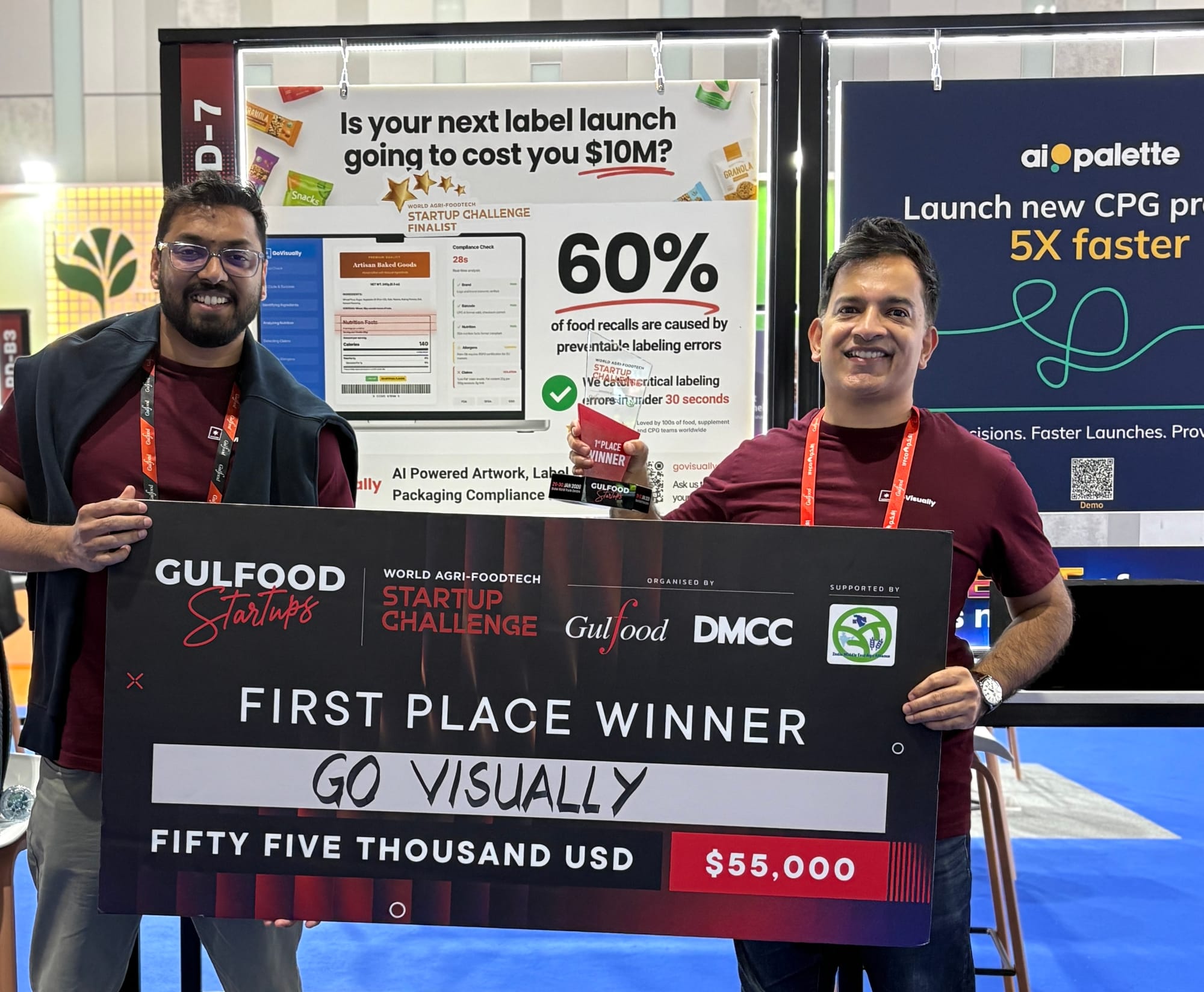
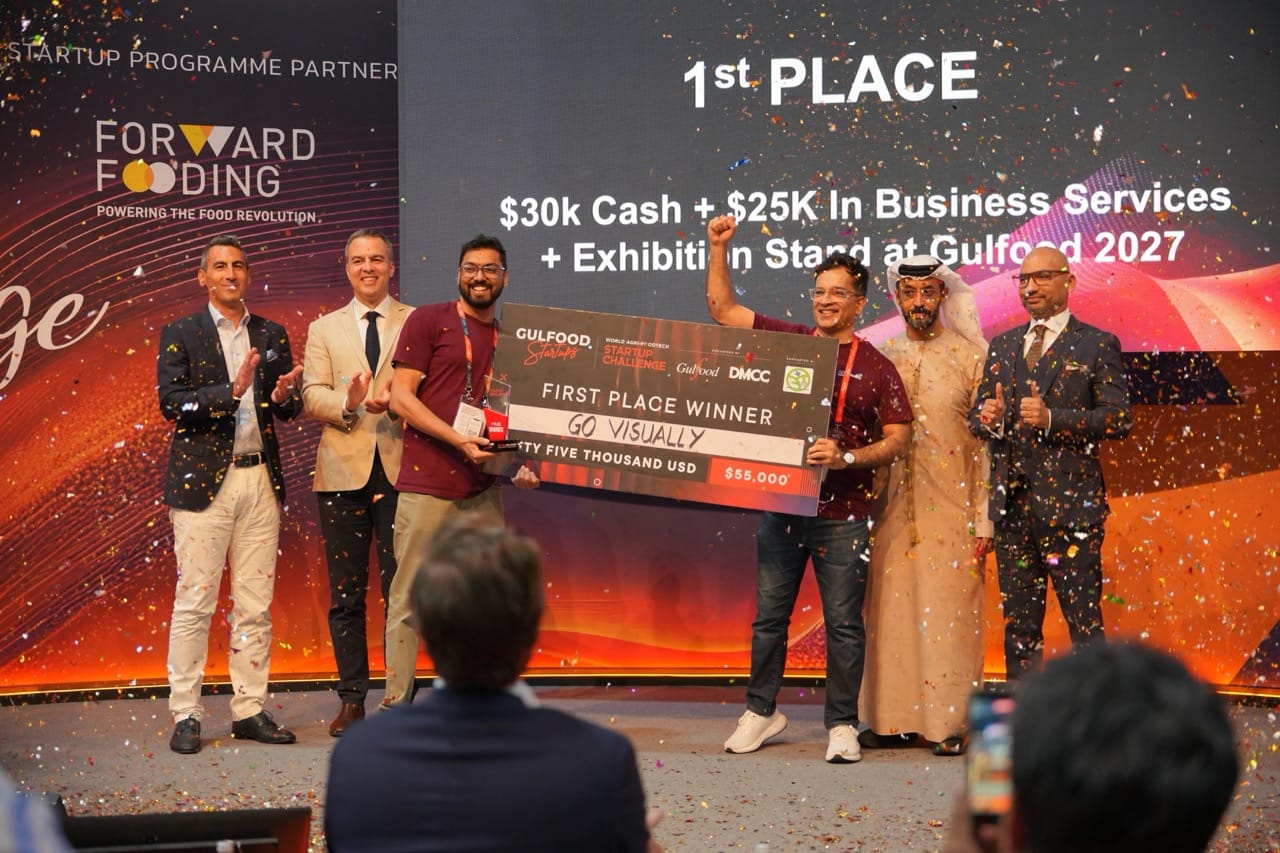
A few months ago, I stood on stage at Gulfood Dubai holding an award I didn't expect to win. GoVisually had just been named the winner of the World Agri-FoodTech Startup Challenge — competing against 250+ startups from around the world, in front of 150+ investors.
I almost didn't apply. We've been building GoVisually for over 12 years, but we've always been heads-down on the product rather than chasing awards. Still, after a decade-plus in this space, we thought it was time to put our work in front of a different kind of audience.
The problem
A single wrong ingredient on a food label can trigger a recall. Allergen misses, wrong nutritional values, regulatory non-compliance across different markets. These aren't rare. They happen all the time.
The way most companies catch these errors is still manual review. Someone prints out a label, grabs a red pen, checks it against a spreadsheet. Emails it to three different people. Waits days. And sometimes they still miss the one thing that matters.
I've watched this process up close for years. We built GoVisually originally as a creative proofing tool — a place where teams could review and approve design work without drowning in email threads. But the more we worked with CPG brands, the more we saw the same pattern: the real pain wasn't just getting feedback on designs. It was making sure what ended up on shelf was actually compliant.
What we built (and why it won)
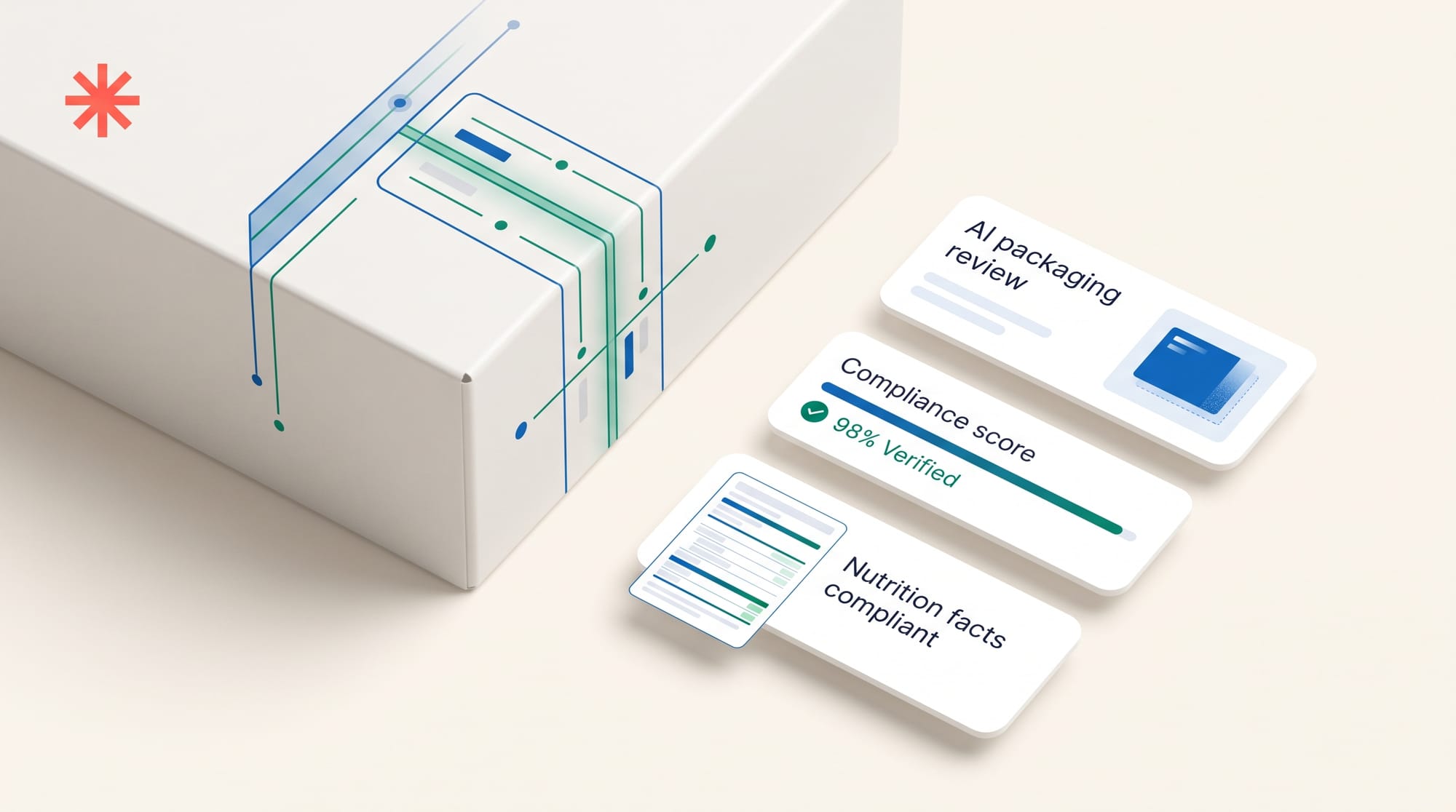
GoVisually now uses AI to check labels against FDA, EU, GCC, and FSANZ regulations - automatically. Upload a label, and our AI scans it against the relevant regulatory framework. It catches things humans miss — and when you're checking 200+ SKUs across 4 different regulatory markets, things will get missed. That's just the math.
What I think resonated with the judges at Gulfood was that this isn't a solution looking for a problem. Every CPG brand we talk to has war stories about label errors that made it to print. Recalls they narrowly avoided — or didn't. Regulatory submissions that got bounced because someone missed a font size requirement on the ingredient list.
The judges saw 250+ startups. Ours was the one solving a problem they'd actually seen in their own supply chains.
What Gulfood means for us
Winning felt great for about 24 hours. Then the "okay, now what?" kicked in.
For us, this is about credibility in a region we care about. The Middle East and Gulf markets have some of the most complex food labelling requirements in the world — bilingual labels (Arabic and English), GCC/GSO standards, specific halal certification requirements. Brands exporting into the region need to get this right, and there's very little tooling to help them.
DMCC, which supported the challenge, is helping us expand our presence in the Middle East. That matters because the GCC food market is growing fast, and the regulatory bar keeps getting higher.
We had roughly 150 people stop by our booth during the event. Not all of them are prospects, but the conversations were telling. The same questions kept coming up: "Can your AI check against GCC standards?" "Does it work for bilingual labels?" "Can we train it on our own internal SOPs?"
Yes, yes, and yes.
What's next
We haven't figured everything out — 12 years in and the to-do list never gets shorter. But the product works, the market need is real, and now we have proof that people across the industry see it too.
If you're dealing with label compliance across multiple markets, or you've had that stomach-dropping moment where something wrong made it further than it should have — I'd like to talk. No pitch, just a conversation about whether what we've built could help.
About
GoVisually is an AI-powered label compliance platform for the CPG industry. We help brands catch label errors before they become recalls. Learn more at govisually.com