
How to Reduce Packaging Compliance Review Time by 75%: AI-Powered Strategies

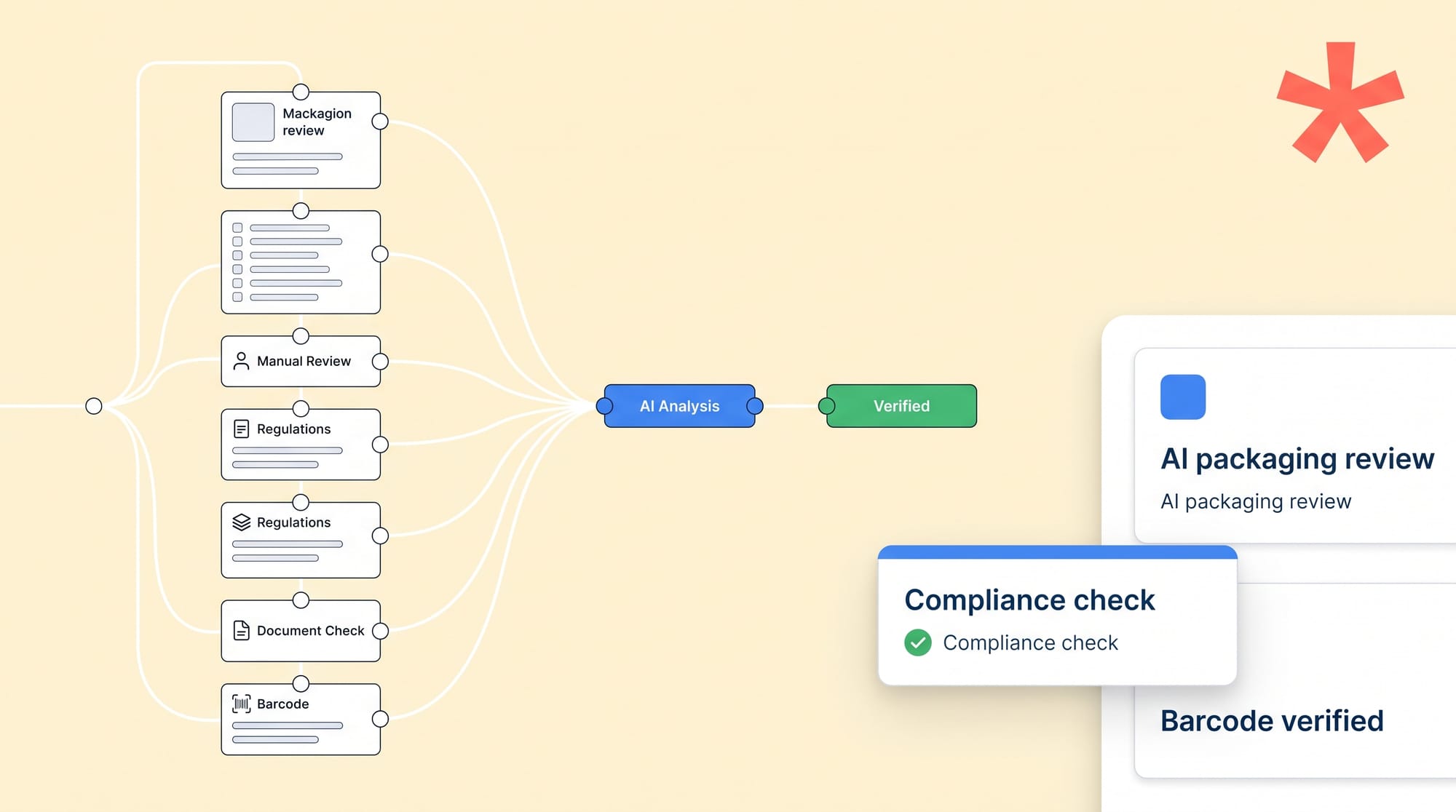
From 8 hours to 2 hours per SKU: How leading CPG brands are transforming compliance workflows.
This isn't an aspirational goal; it's the new operational standard for teams leveraging AI. The traditional, manual approach to packaging compliance — endless email chains, marked-up PDFs, and fatigued human reviewers — is no longer sustainable. It's slow, expensive, and dangerously prone to errors that lead to costly recalls.
PwC's Global Compliance Survey 2025 found that 85% of respondents said compliance requirements had become more complex in the last three years, and 77% said their company had been negatively impacted by compliance complexity in growth-related areas. The same report also says 82% of companies plan to invest more in technology to automate and optimize compliance activities.
Key Takeaways
- Manual reviews are risky: Prone to missed labeling and allergen errors — and slow.
- AI speeds things up: Checks compliance, errors, and barcodes in seconds.
- Centralized data is key: One source of truth prevents costly mismatches.
- Audit trails matter: Every change tracked, always audit-ready.
The Hidden Costs of Manual Compliance Reviews
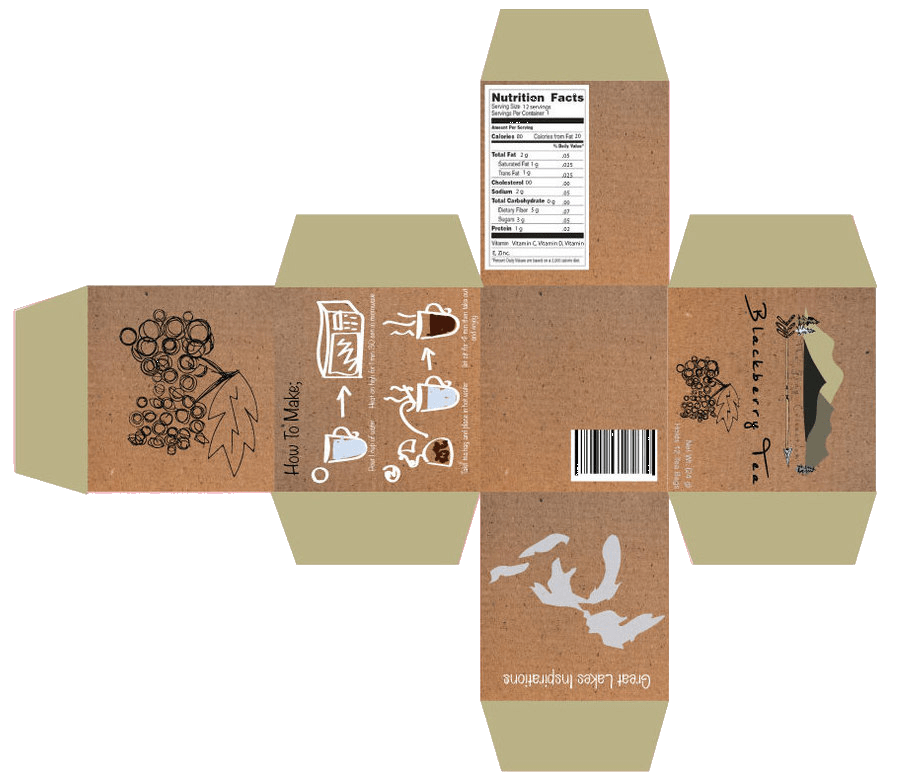
For most CPG brands, the packaging review process is a well-known bottleneck. A single SKU can require dozens of revisions across regulatory, marketing, legal, and design teams — making manual checks a significant business risk, not just a time drain.
Human error is inevitable when reviewers are tasked with scrutinizing tiny font sizes, complex ingredient lists, and shifting regulatory codes for hours on end. According to recent FDA enforcement data, 10 of the last 50 recalls were triggered by labeling errors and undeclared allergens — Class I and Class II recalls that endanger consumers and damage brand reputation.
Each manual review cycle introduces opportunities for failure:
Time Sink: Industry teams report that a thorough manual compliance check takes between 4 and 8 hours per SKU, depending on complexity and the number of target markets. For a portfolio of hundreds of SKUs, this translates into thousands of hours of expert time spent on repetitive tasks.
Inconsistent Application: Without a centralized system, rules are applied inconsistently. One reviewer might flag a potential claim issue while another misses it entirely. This variability creates unpredictable risk across your product portfolio.
No Verifiable Audit Trail: An approval given over email or a verbal sign-off in a meeting provides zero traceability for auditors. When a regulator asks you to prove how a specific label was approved, a scattered trail of PDFs and messages is a failing response.
Ready to see what AI-powered compliance looks like in action? Book a free GoVisually demo and watch the workflow live.
3 Proven Strategies to Cut Compliance Review Time by 75%
This reactive approach — fixing errors as they are found — is a recipe for delays, budget overruns, and recalls. A proactive, system-driven strategy is the only way to scale compliance effectively. Here's how the most efficient CPG teams are doing it.

Strategy 1: Establish a Single Source of Truth
Disorganized data is the root of most preventable compliance failures. When formulation data lives in one spreadsheet, nutritional information in another, and marketing claims in a third, it's almost certain that outdated or incorrect information will end up on a label.
Before you can automate checks, you must first centralize your data. A Product Information Management (PIM) or Product Lifecycle Management (PLM) system is the gold standard for creating a "single source of truth." This ensures that everyone from R&D to marketing is working from the same approved dataset.
However, a PIM/PLM alone doesn't solve the artwork problem. Your compliance platform must act as the bridge, validating that the final packaging file perfectly reflects the data in your centralized system.
This is where GoVisually's Custom Fields & Metadata become critical. You can configure your GoVisually projects to mirror your PIM data structure, creating fields for:
- Regulatory Status: (e.g., Pending, Approved for US, Approved for EU)
- Formula Version: (e.g., F-1.7b)
- Allergen Profile: (e.g., Contains Wheat, Soy; Processed in a facility with Peanuts)
- Net Weight Statement: (e.g., NET WT. 12 OZ. (340g))
By structuring this data directly within your review platform, you create the foundation for automated checks. Your teams can see at a glance the core compliance attributes of any proof, and more importantly, the AI has structured data to validate against.
Strategy 2: Implement AI Packaging Compliance Automation
This is where you achieve the 75% reduction in review time. By automating the most tedious and error-prone aspects of the review, you free your experts to focus on strategic judgment rather than pixel-by-pixel proofreading. Research shows that label generation and verification is a primary use case for AI, with 53% of CPGs adopting it for this purpose.
GoVisually's AI Playbooks system automates this entire workflow. When a designer uploads a new packaging file, a pre-configured Playbook automatically triggers a sequence of AI agents to run a comprehensive compliance audit in seconds.
Here's a step-by-step look at a typical Playbook for a US food product:
File Upload Trigger: A designer uploads SKU-123_v3.pdf. The "US Food & Bev Compliance" Playbook runs automatically.
US FDA Regulatory Agent (v3.0): In under 30 seconds, this agent scans the entire label. It validates the Nutrition Facts Panel format, checks that ingredients are in descending order of predominance, verifies the net weight statement is correct, and flags any undeclared major allergens. Every finding is logged with a severity level and a direct citation to the relevant 21 CFR section.
Spelling & Grammar Agent (v1.0): Next, this agent checks for typos and grammatical errors, using a custom dictionary to ensure brand-specific terminology is spelled correctly and consistently.
Barcode & QR Code Validator (v1.0): The agent detects the UPC barcode, verifies its GS1 compliance, and provides a readability score. It flags issues like poor contrast or insufficient quiet zones that could cause failures at retail scanners.
Dynamic Compliance Auditor (v1.0): This agent checks the artwork against your brand's specific rules. Upload your brand guidelines as a PDF, and the AI automatically extracts rules like "Logo must be 15% from the left edge."
The entire multi-agent analysis is complete in less than a minute. Your 8-hour manual review is now a 15-minute strategic assessment of the AI's findings.
Curious how much your team could save? Take a free demo call with our experts to understand the impact of automation on your specific workflow.
Strategy 3: Build an Auditable, Traceable Review Process
Speed and accuracy are meaningless without accountability. In a regulated industry, you must be able to prove how and why a piece of packaging was approved.
Step 1: Implement Mandatory Human Checkpoints
GoVisually's Approval Checklists ensure mandatory human sign-offs occur before any file can be approved. Templates can be created for different stages:
- Legal Review Checklist: Requires counsel to confirm all health claims are substantiated.
- Allergen Sign-Off Checklist: Requires your QA manager to verify the allergen statement against the final formulation.
- Print Readiness Checklist: Requires your pre-press expert to confirm all technical specs are correct.
Conclusion
The CPG landscape demands speed, accuracy, and airtight regulatory oversight. Continuing to rely on manual compliance processes means accepting unnecessary risk, cost, and delay. By centralizing product data, implementing AI-powered automation, and building auditable review workflows, teams can cut packaging review time by 75%, reallocating expert hours from repetitive proofreading to strategic, high-value work. The result is faster speed-to-market, fewer recall risks, and a compliance process that scales with your portfolio.
FAQs
What is artwork compliance?
Artwork compliance is the process of ensuring that packaging artwork accurately reflects all approved, regulatory, and brand-required information before going to print. It prevents costly errors, rejections, and recalls caused by mismatches between approved data and final design files.
What are common causes of artwork rejection in pharma packaging?
The most common causes of artwork rejection in pharma packaging include undeclared allergens, incorrect dosage information, outdated formula versions, missing regulatory warnings, and barcode readability failures. Even minor copy errors or unapproved claim changes can trigger a rejection or batch recall.
What is packaging compliance?
Packaging compliance is the process of ensuring a product's packaging meets all applicable regulatory, legal, and industry standards before it reaches market. This covers everything from label claims and ingredient declarations to net weight statements and region-specific mandates.
What are the 4 packaging strategies?
The 4 core packaging compliance strategies are: centralizing product data in a single source of truth, automating compliance checks with AI, enforcing structured approval workflows with mandatory sign-offs, and maintaining a version-controlled audit trail for full regulatory traceability.