
Private Label Compliance: Retailer-Specific Requirements for Walmart, Target, Costco (2026 Guide)

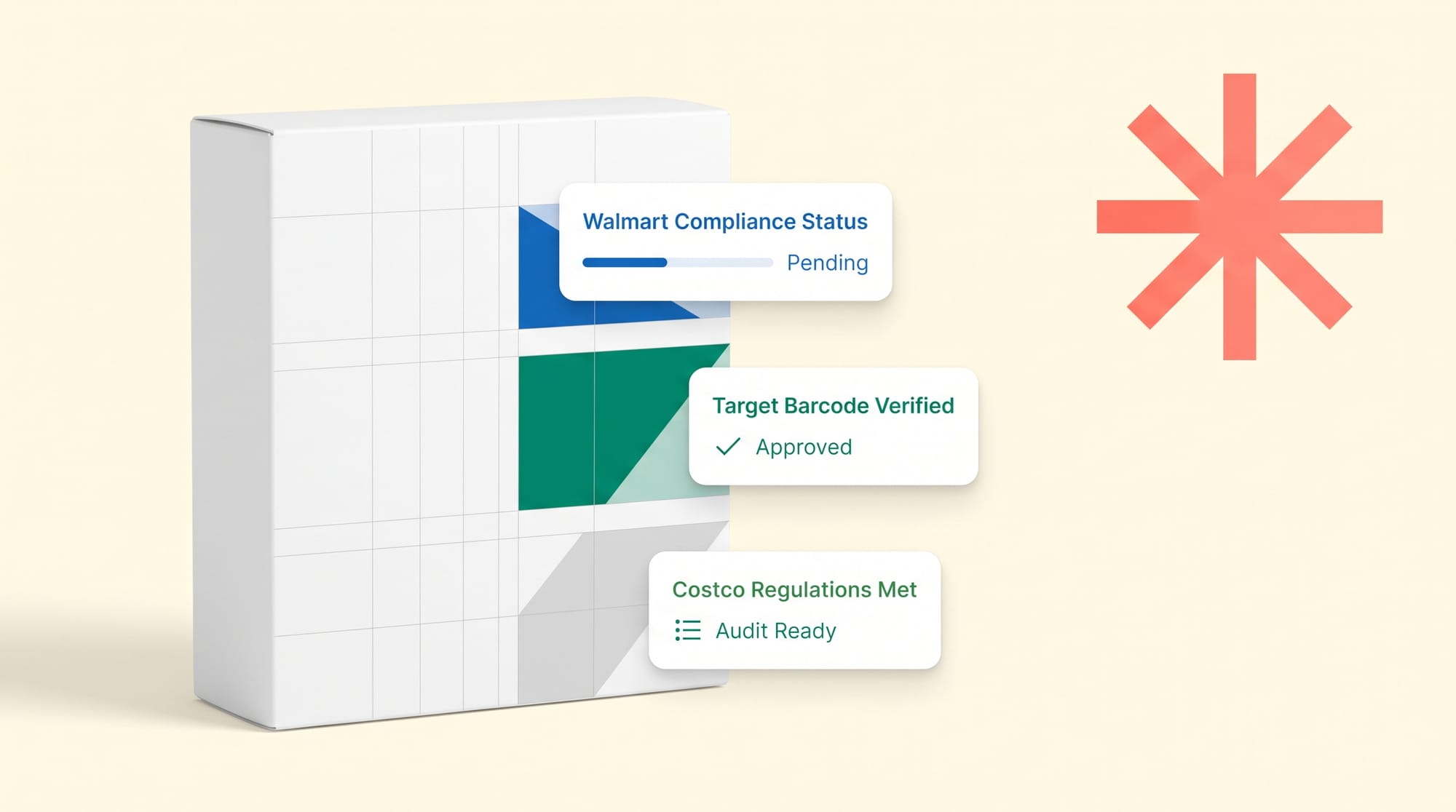
For Consumer Packaged Goods (CPG) brands, securing a private label partnership with retail giants like Walmart, Target, or Costco represents a monumental opportunity for growth. However, this opportunity comes with stringent compliance demands. Each retailer operates with its own unique set of rules for packaging, labeling, logistics, and data exchange.
Failure to meet these precise requirements can lead to costly chargebacks, rejected shipments, and ultimately, the termination of a lucrative partnership. In 2026, as supply chains become more complex and retailers demand greater efficiency, mastering these retailer-specific compliance mandates is the difference between profit and loss.
Struggling to keep up with diverse retailer requirements? Start your free trial with GoVisually and streamline your private label packaging approval process today.
Walmart: Mastering OTIF and the SQEP "Perfect Order"
Walmart, the world's largest retailer, enforces compliance through two core programs: OTIF (On-Time In-Full) and SQEP (Supplier Quality Excellence Program). These programs govern every aspect of product movement, from your facility to Walmart's distribution centers.
OTIF: On-Time In-Full
OTIF measures whether your shipments arrive at Walmart distribution centers on time and with the correct quantity. As of 2026, prepaid suppliers must achieve 90% on-time and 95% in-full rates. Missing these targets results in a significant 3% chargeback on the cost of goods for non-compliant cases.
- Must Arrive By Date (MABD): This is the single biggest source of OTIF fines. Shipments must arrive within a precise window; arriving early is as non-compliant as arriving late, as Walmart DCs plan capacity tightly.
- Case-Level Tracking: OTIF is tracked at the individual case level, not just the purchase order, demanding granular precision.
SQEP: Supplier Quality Excellence Program
SQEP focuses on how products are prepared, packed, and labeled. It ensures a "Perfect Order" from your facility. Key aspects include:
- PO Accuracy: The final purchase order must match items shipped exactly.
- Barcode & Labeling Compliance: All cases require scannable GS1-128 barcodes that meet Walmart's strict specifications for print quality, size, position, and white space. Labels must match the item setup precisely.
- Secondary Packaging: Packaging must meet durability and size requirements to move efficiently through Walmart's conveyor-based distribution centers.
- FSMA 204 Mandate: For food and beverage suppliers, Walmart requires compliance with FSMA 204 Key Data Elements (KDEs) in ASNs as of August 2025, ahead of the FDA's national deadline.
Walmart's Private Brands Evolution
Walmart is continuously investing in its private brands, with a modern redesign of its flagship Great Value brand unveiled in April 2026. This signifies an increased focus on packaging quality and design, making compliance even more critical for brand presentation.
Target: Navigating OTFR and the Good & Gather Standard
Target is known for its demanding yet rewarding supplier relationships. Its primary supply chain performance program is OTFR (On-Time Fill Rate), complemented by the Perfect Order Program and stringent ethical sourcing standards.
OTFR: On-Time Fill Rate
OTFR measures whether suppliers deliver the right product, in the right quantity, at the right time. Non-compliance can lead to fines calculated as a percentage of the cost of goods sold (COGS).
- Supplier Performance Adherence: 1.5% COGS fine for not shipping 100% on assigned date/time per VRS.
- On-Time (Collect/Prepaid): 3% COGS fine for not meeting pickup or delivery windows.
- Fill Rate Original: 3% COGS fine for not shipping at least 95% of items on the original EDI 850.
Perfect Order Program
Launched in May 2025, Target's Perfect Order Program mirrors Walmart's SQEP, focusing on eliminating defects at the ASN and barcode level. A key penalty is $0.75 per defective carton for physical barcode issues.
Good & Gather Standards
Target's private label brands, such as Good & Gather, have strict ingredient standards, often prohibiting over a hundred ingredients. This extends to packaging, requiring careful material selection and clear communication.
Standards of Vendor Engagement (SOVE)
Target's SOVE program mandates ethical sourcing, labor rights, and prohibits forced or child labor. Non-compliance can lead to significant fines and deactivation as a supplier.
Ensure your Target packaging meets every detail. Book a demo with GoVisually to streamline your artwork review and approval process.
Costco: The Club-Pack Challenge and Cross-Dock Precision
Costco operates a unique, buyer-driven club store model that demands exceptional operational precision. Unlike other retailers, Costco's compliance is less about a standardized portal and more about direct buyer relationships and adherence to specific physical product and pallet configurations.
Club-Pack Packaging
Costco's signature is the "club-pack"—multi-unit bundles designed for direct display on the club floor. These require:
- Display-Ready Design: Packaging must be robust and attractive, ready for immediate customer purchase without additional shelving.
- Durability: Club packs must withstand significant handling by customers and staff without damage.
- Exact Quantity: Costco specifies the precise number of units per pack; under-packs or over-packs result in chargebacks.
Cross-Dock Delivery and Pallet Specifications
Costco's depots operate on a cross-dock model, meaning products move from inbound to outbound within 24-48 hours. This demands flawless pallet configuration and labeling.
- Pallet Specs: Standard 48x40 GMA pallets are required, with strict rules against overhang, weight limits per layer (no single layer exceeding 500 lbs), and overall height restrictions.
- SSCC-18 Labeling: Every pallet and case must carry SSCC-18 labels using GS1-128 barcode format on two adjacent sides for redundancy and rapid scanning. Accuracy and print quality are paramount.
Kirkland Signature: A Joint-Venture Mindset
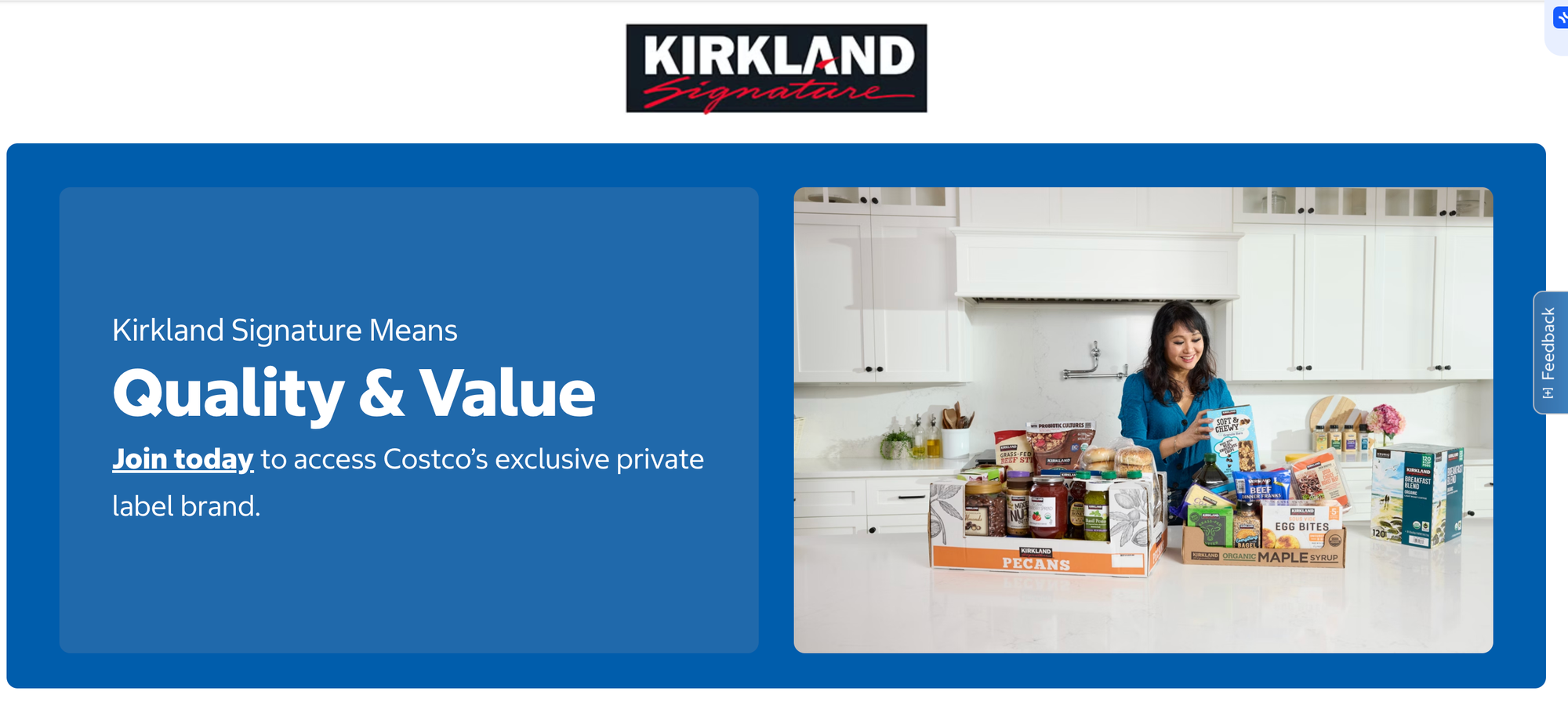
For its Kirkland Signature private label, Costco expects an "open-book costing" approach and a joint-venture mindset from suppliers, emphasizing a deep, collaborative relationship.
Universal Standards: EDI, GS1, and the FSMA 204 Mandate
Despite their individual nuances, all three retailers share common foundational compliance requirements that are essential for any private label supplier.
EDI (Electronic Data Interchange)
EDI is mandatory for major volume suppliers across Walmart, Target, and Costco. The Advance Ship Notice (ASN - EDI 856) is particularly critical, as it must precisely match the Purchase Order (EDI 850) and the physical shipment. Mismatches are a leading cause of chargebacks.
GS1 Standards
GS1-128 barcodes are the universal standard for carton and pallet labeling. Ensuring these barcodes are scannable, correctly placed, and contain accurate data is non-negotiable. The SSCC-18 (Serial Shipping Container Code), used by Costco, is a specific GS1-128 application for unique pallet identification.
FSMA 204 Traceability (Food & Beverage)
The Food Safety Modernization Act (FSMA) Section 204 mandates enhanced traceability for certain foods. While the FDA has extended the national compliance deadline to 2028, Walmart is requiring its food and beverage suppliers to comply with FSMA 204 ASN and packaging requirements by August 2025. This highlights the need for suppliers to meet retailer-specific deadlines that may precede federal mandates.
GoVisually: Your Secret Weapon for Error-Free Private Label Packaging
The sheer volume of specific requirements, evolving mandates, and potential for costly chargebacks makes private label compliance a daunting task. Manual review processes, email chains, and fragmented feedback loops are simply unsustainable. This is where GoVisually provides a critical advantage for CPG brands.
Streamline Your Compliance with GoVisually
GoVisually centralizes and streamlines the entire packaging artwork review and approval process, ensuring every detail meets retailer specifications:
- Precision Annotation & Feedback: Legal, compliance, and design teams can annotate directly on packaging artwork, marking specific areas for barcode placement, ingredient declarations, or retailer logos. This eliminates ambiguity and ensures accuracy.
- Version Control & Audit Trails: Every change, comment, and approval is automatically tracked and timestamped, creating an immutable audit trail. This is invaluable for demonstrating due diligence during retailer audits or chargeback disputes.
- Accelerated Approval Cycles: By consolidating feedback from all stakeholders—from brand managers to legal counsel—into a single platform, GoVisually drastically reduces approval times. This helps brands meet tight retailer deadlines and avoid delays that can lead to fines.
- Reduced Chargebacks: Proactively catching and correcting labeling, packaging, or data errors before production ensures that shipments are compliant from the outset, significantly reducing the risk of costly chargebacks.
In the competitive world of private label, compliance isn't just about avoiding penalties; it's about building trust and securing long-term partnerships with major retailers. GoVisually empowers brands to navigate this complex landscape with confidence, ensuring their products are always retail-ready.
Ready to eliminate private label chargebacks? Get started with GoVisually for free and ensure your packaging is always compliant.FAQ: Your Quick Guide to Private Label Compliance
What is OTIF for Walmart?
OTIF (On-Time In-Full) is Walmart's key performance metric for suppliers, requiring 90% on-time and 95% in-full delivery rates. Failure to meet these targets results in a 3% chargeback on the cost of goods.
What is the Target Perfect Order Program?
Launched in May 2025, Target's Perfect Order Program focuses on eliminating defects in ASNs and barcodes. It includes penalties for inaccurate ASNs and defective physical barcodes.
What are Costco's club-pack requirements?
Costco's club-pack packaging must be display-ready, robust, and contain the exact specified quantity of units. These packs go directly to the club floor, requiring high visual and structural quality.
Is FSMA 204 compliance mandatory for private label food products?
While the FDA's national deadline is 2028, Walmart requires its food and beverage suppliers to comply with FSMA 204 ASN and packaging requirements by August 2025. Suppliers must adhere to retailer-specific mandates.
How does GoVisually help with private label compliance?
GoVisually centralizes the packaging artwork review and approval process, providing tools for precision annotation, version control, and audit trails. This helps brands ensure all packaging and labeling details meet retailer-specific requirements, reducing errors and chargebacks.