
Building an Effective Artwork Management Process in 2026: A Strategic Guide for CPG Brands

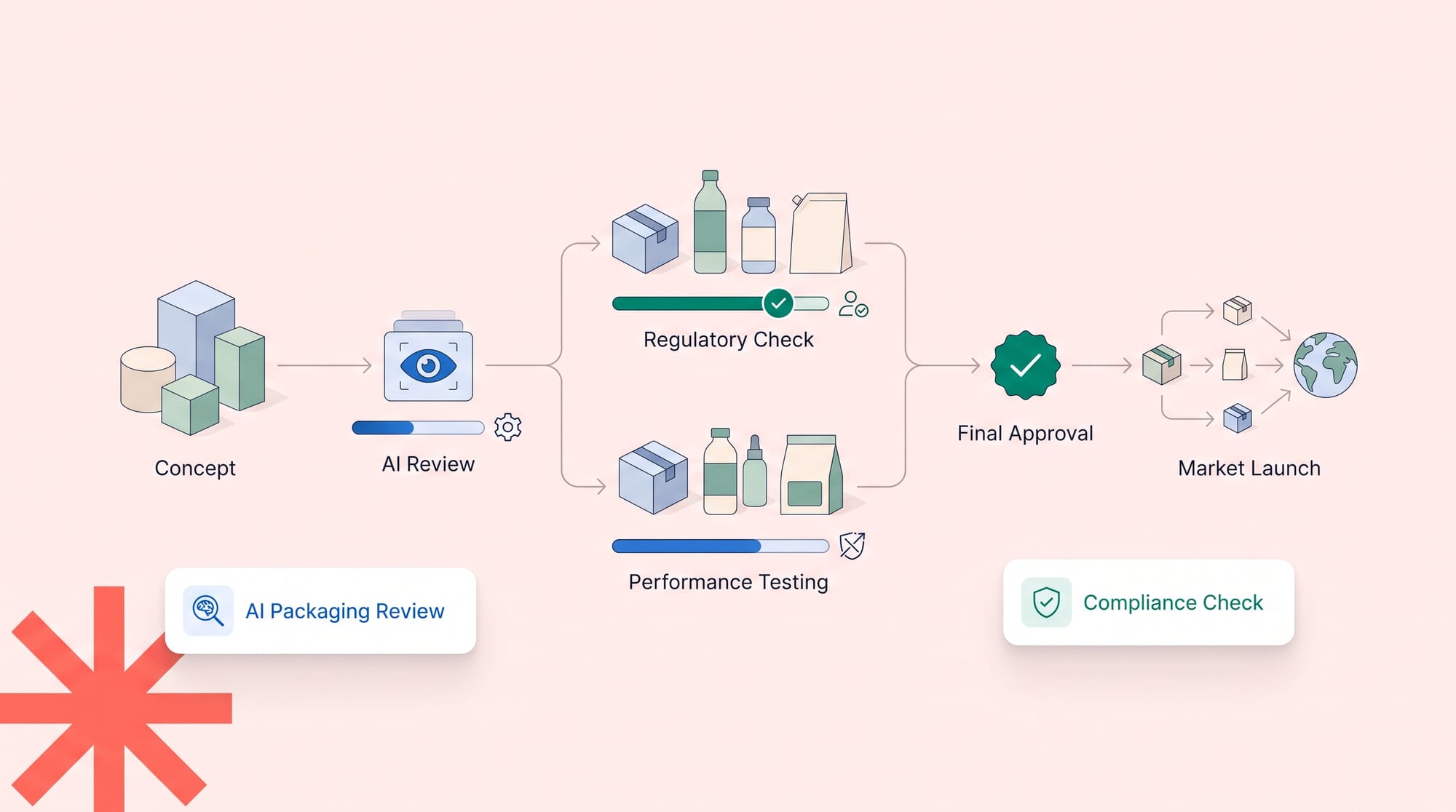
The New Frontier of Packaging: Why Artwork Management is Mission-Critical in 2026
In the rapidly evolving landscape of Consumer Packaged Goods (CPG), packaging is no longer just a container; it's a dynamic communication tool, a regulatory minefield, and a critical brand touchpoint. As we navigate 2026, brands face unprecedented pressures: escalating global compliance demands, the rapid integration of AI, and the relentless pursuit of speed-to-market. An effective artwork management process isn't just a nice-to-have—it's the strategic backbone that determines whether your products launch successfully, remain compliant, and capture consumer attention.
Yet, many CPG brands are still grappling with outdated, manual workflows that lead to costly errors, delays, and missed opportunities. This guide will delve into the essential components of a future-proof artwork management process, leveraging 2026 trends to help your brand not just survive, but thrive, in this complex environment.
Is your artwork management process ready for 2026? Discover how GoVisually can transform your workflow and keep you ahead of the curve.
The High Stakes of Inefficient Artwork Management
Without a robust system, CPG brands are vulnerable to a cascade of problems that directly impact profitability and reputation:
- Regulatory Non-Compliance: From the EU Green Claims Directive to FSSAI mandates in India and post-Brexit UK rules, global regulations are more stringent than ever. Errors in labelling lead to fines, product recalls, and market access blocks.
- Delayed Time-to-Market: Manual review cycles, email-based feedback, and version control chaos can add weeks or even months to product launches, costing millions in lost revenue.
- Escalating Costs: Reworks, reprints, and legal penalties due to artwork errors significantly inflate operational expenses.
- Brand Erosion: Inconsistent branding, outdated information, or misleading claims on packaging can damage consumer trust and brand equity.
- Human Error: Even the most diligent teams are prone to mistakes when managing hundreds or thousands of SKUs manually.
2026 Trends Shaping Artwork Management: Beyond Automation
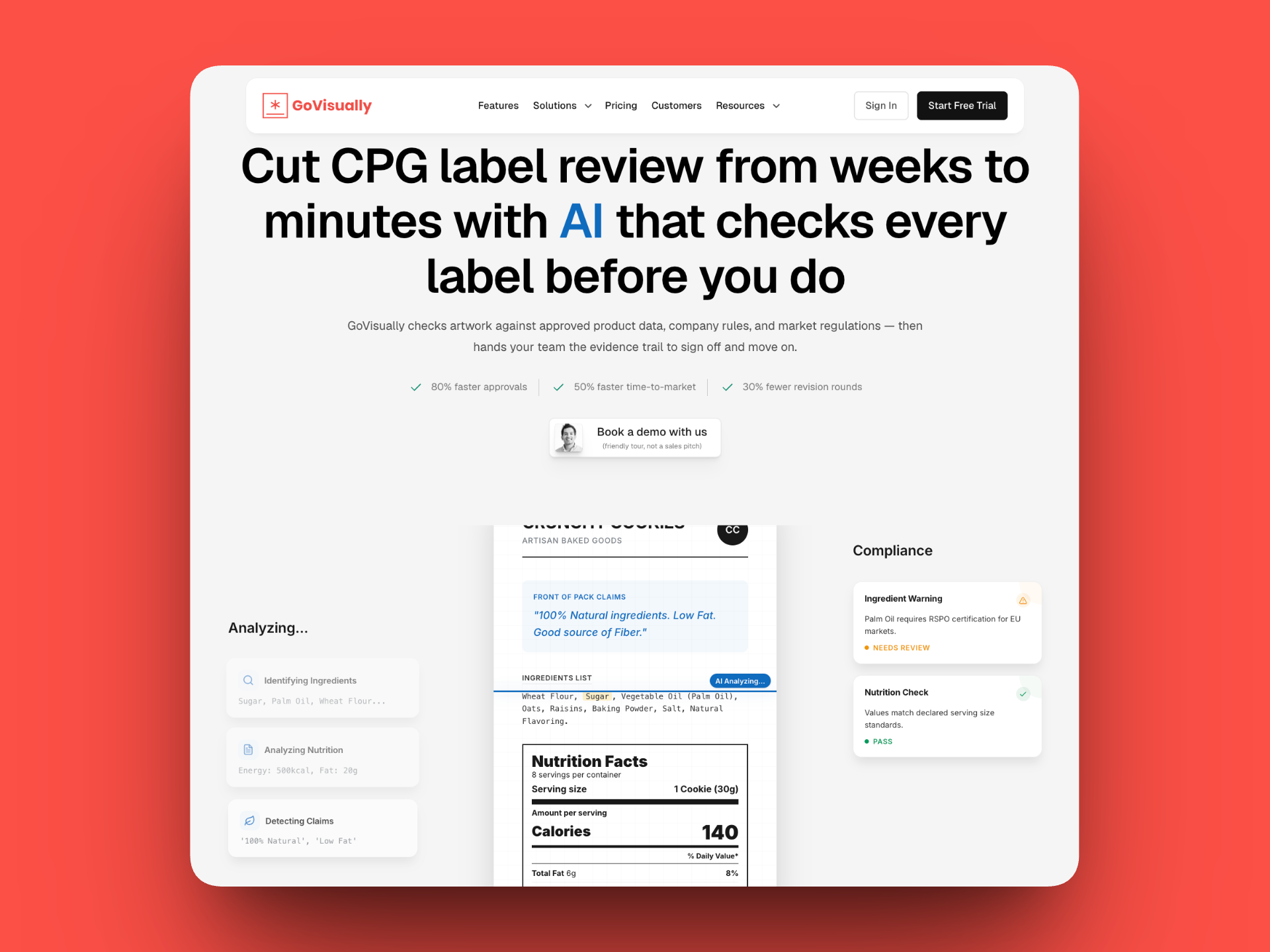
The artwork management landscape is undergoing a profound transformation, driven by technological advancements and shifting regulatory paradigms. Understanding these trends is crucial for building a process that is not just efficient, but intelligent and adaptive.
1. The Rise of Applied AI in Compliance
While terms like "Agentic AI" and "Neural-Compliance Frameworks" might sound futuristic, their practical application in artwork management is already here. In 2026, AI is moving beyond simple automation to intelligent assistance, capable of:
- Automated Content Verification: AI-powered tools can scan artwork for mandatory elements, allergen declarations, nutritional information, and even detect potential greenwashing claims against predefined rulebooks.
- Real-time Risk Assessment: Asynchronous, background AI continuously monitors for potential compliance risks, flagging discrepancies before they become critical issues.
- Smart Comparison & Proofing: AI-driven comparison tools can instantly identify subtle changes between artwork versions, ensuring accuracy and reducing manual review time.
2. Data Sovereignty and Private AI
With increasing concerns around data privacy and intellectual property, the use of Small Language Models (SLMs) within private cloud environments is gaining traction. This allows brands to leverage powerful generative AI capabilities for content creation and verification without compromising sensitive product data.
3. Outcome-Based Regulatory Oversight
Regulators are shifting from prescriptive, "check-the-box" compliance to an outcome-based approach. This means brands need to demonstrate effective risk mitigation and robust internal controls, rather than just following a rigid set of procedures. A transparent, auditable artwork management process becomes paramount for proving due diligence.
The Core Pillars of an Effective Artwork Management Process in 2026
Building a future-ready artwork management process requires a holistic approach, integrating people, processes, and technology.
1. Centralized Digital Asset Management (DAM)
At the heart of any effective process is a single source of truth for all packaging assets. A robust DAM system ensures that designers, marketers, and regulatory teams are always working with the latest approved logos, brand guidelines, legal text, and dielines. This eliminates version control issues and ensures brand consistency across all SKUs and markets.
2. Streamlined Workflow Automation
Manual handoffs and email-based approvals are bottlenecks. An effective process utilizes automated workflows that:
- Define Clear Stages: From brief creation to final approval and release.
- Assign Roles & Responsibilities: Clearly delineate who does what at each stage.
- Automate Notifications: Ensure stakeholders are alerted when their input is required.
- Escalate Issues: Automatically flag delays or non-compliance for immediate attention.
3. Intelligent Proofing & Review Tools
Beyond basic annotation, modern proofing tools integrate AI to enhance accuracy and efficiency:
- Side-by-Side Comparison: Instantly compare different versions of artwork to spot changes.
- Text Verification: Automatically check for typos, font sizes, and adherence to legal disclaimers.
- Barcode Validation: Ensure barcodes are scannable and correctly encoded.
- Color & Print Accuracy: Tools to verify color profiles and print specifications.
4. Robust Compliance & Audit Trails
This is where an effective process truly shines. It must provide:
- Configurable Rulebooks: The ability to embed regulatory requirements (e.g., allergen highlighting, FBO address rules) directly into the review process.
- Automated Compliance Checks: AI-driven tools that can flag potential non-compliance based on regional or product-specific rules.
- Comprehensive Audit Trails: A detailed, immutable record of every change, comment, and approval, crucial for regulatory inspections and demonstrating due diligence.
5. Seamless Integration Ecosystem
Your artwork management system shouldn't operate in a silo. It needs to integrate seamlessly with your existing tech stack, including:
- Product Information Management (PIM): To pull accurate product data directly onto labels.
- Enterprise Resource Planning (ERP): For supply chain and production coordination.
- Creative Tools: Direct plugins for Adobe Creative Suite to streamline design handoffs.
Outranking the Competition: Why GoVisually is Your Strategic Advantage in 2026?
While competitors like Artwork Flow (Esko), ManageArtworks, Wrike, Workfront, Bynder, Frontify, Filestage.io, and Kallik offer various features, many fall short in delivering a truly integrated, intelligent, and user-friendly solution tailored for the complexities of 2026 CPG artwork management. GoVisually is engineered to fill these gaps, providing a superior platform that empowers brands to achieve compliance, accelerate launches, and maintain brand integrity.
| Feature/Benefit | GoVisually Advantage | Competitor Weakness (General) |
|---|---|---|
| Ease of Use & Onboarding | Intuitive UI, rapid adoption, minimal training | Often complex, steep learning curve, inconsistent UX |
| Specialized Packaging Proofing | Advanced tools for packaging-specific files (dielines, layers, barcodes) | Generic proofing, lacks deep packaging functionality |
| AI-Powered Compliance | Applied AI for automated checks (allergens, text, green claims) | Limited or abstract AI, not deeply integrated for compliance |
| Comprehensive Audit Trails | Immutable record of all feedback and approvals for regulatory defense | Fragmented records, difficult to reconstruct full history |
| Integration with Creative Tools | Seamless plugins for Adobe Creative Suite | Often clunky or limited integration |
| Focus | Agile, compliance-driven artwork management for CPG | General project management, DAM, or prepress-heavy |
GoVisually: The Agile Compliance Hub for Modern CPG Brands
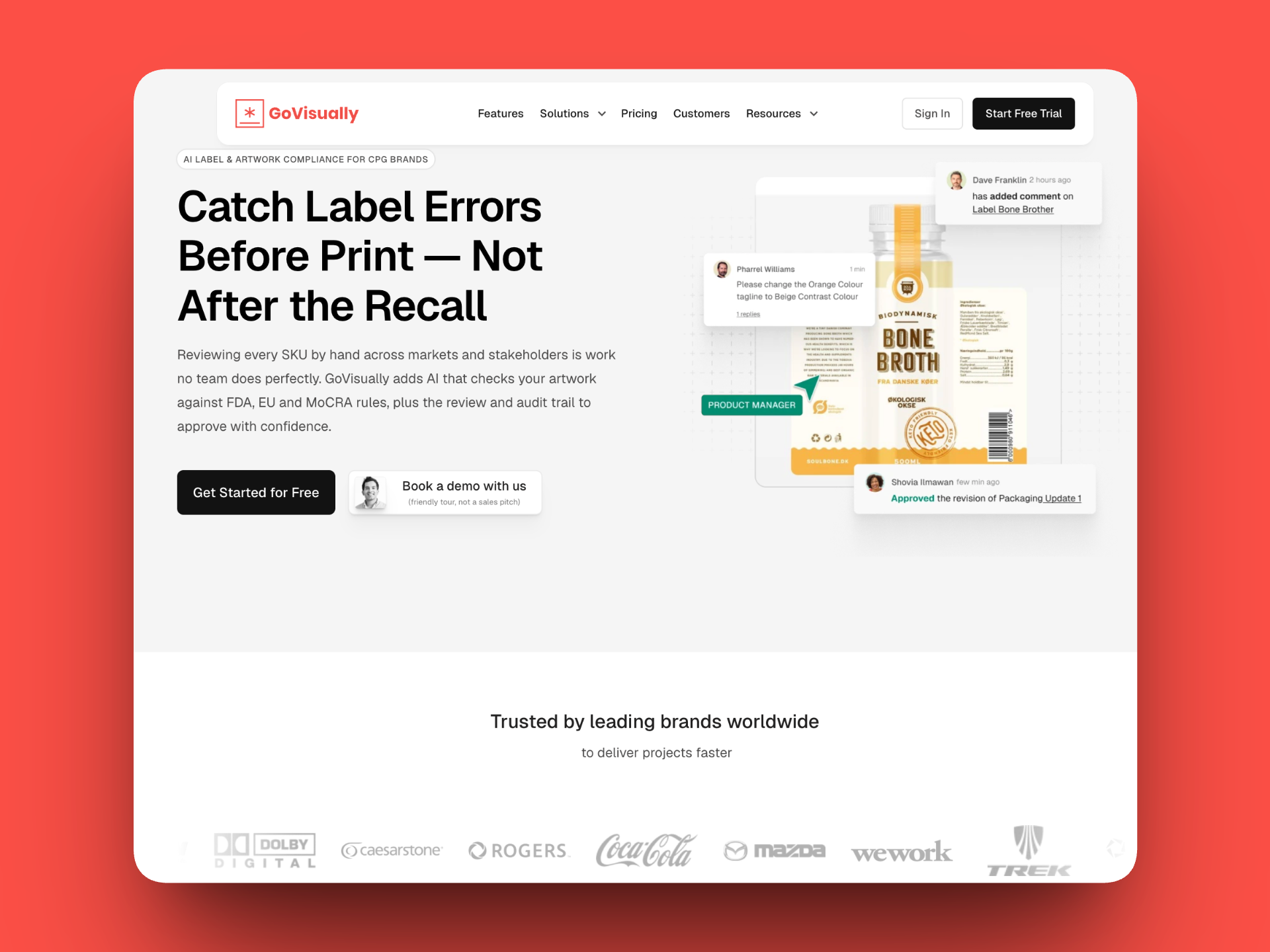
GoVisually stands out by combining powerful features with an unparalleled focus on user experience and real-world compliance challenges. Unlike generalist project management tools that lack specialized packaging capabilities, or overly complex prepress solutions that overwhelm marketing teams, GoVisually offers a balanced approach:
- Centralized, Intelligent Review: Bring all stakeholders into a single, intuitive platform where AI-powered tools assist in verifying content against regulatory requirements and brand guidelines.
- Accelerated Approval Cycles: Cut down review times by up to 80% with automated workflows, clear annotation tools, and real-time collaboration. This means faster product launches and quicker market responsiveness.
- Bulletproof Compliance: Every comment, every change, every approval is meticulously recorded, creating an unbreakable audit trail that stands up to the most rigorous regulatory scrutiny. This is crucial for navigating complex mandates like the Windsor Framework or new sustainability claims directives.
- Seamless Integration: GoVisually integrates effortlessly with your existing DAMs, PIMs, and creative software, ensuring a smooth flow of assets and data across your entire ecosystem.
Stop losing time and money on manual artwork approvals. Request a personalized demo of GoVisually and see how we can streamline your compliance workflow.
Building Your Future-Proof Artwork Management Process: A Checklist
To recap, here’s a checklist for building an effective artwork management process in 2026:
- Assess Current State: Identify bottlenecks, manual tasks, and compliance gaps in your existing workflow.
- Define Requirements: Clearly outline your needs for speed, compliance, collaboration, and integration.
- Embrace AI: Look for solutions that offer practical, applied AI for content verification and risk assessment.
- Prioritize User Experience: Choose a platform that is intuitive and easy for all team members to adopt.
- Demand Auditability: Ensure your system provides a comprehensive, immutable audit trail.
- Integrate Smartly: Select a solution that connects seamlessly with your existing tech stack.
- Partner with the Best: Choose a platform like GoVisually that understands the unique challenges of CPG artwork management in 2026.
FAQ: Common Questions on Artwork Management in 2026
What is artwork management and why is it important for CPG brands in 2026?
Artwork management is the process of controlling and streamlining the creation, review, approval, and distribution of packaging artwork. In 2026, it's critical for ensuring regulatory compliance, accelerating product launches, and maintaining brand consistency amidst complex global requirements and AI integration.
How does AI impact artwork management and compliance?
AI in artwork management enables automated content verification, real-time risk assessment, and smart comparison of artwork versions. This helps detect errors, ensure compliance with regulations (like allergen declarations or green claims), and significantly speeds up the review process.
What are the biggest risks of not having an effective artwork management process?
Key risks include regulatory non-compliance (fines, recalls), delayed time-to-market, increased operational costs due to reworks, damage to brand reputation, and a higher likelihood of human error in complex labelling.
How does GoVisually compare to other artwork management software like Esko or Wrike?
GoVisually differentiates itself by offering an intuitive user experience, specialized packaging proofing tools, and practical AI-powered compliance features, making it more agile and tailored for CPG brands than complex prepress solutions (Esko) or generic project management tools (Wrike).
What is an audit trail in artwork management and why is it essential?
An audit trail is a detailed, immutable record of every action taken on an artwork file, including comments, changes, and approvals. It's essential for demonstrating due diligence during regulatory inspections, proving compliance, and resolving disputes.