
Packaging errors are a data problem, not a design problem
Most packaging errors aren't design mistakes. They happen when the spec, the artwork and the approval live in different places and disagree on the label.
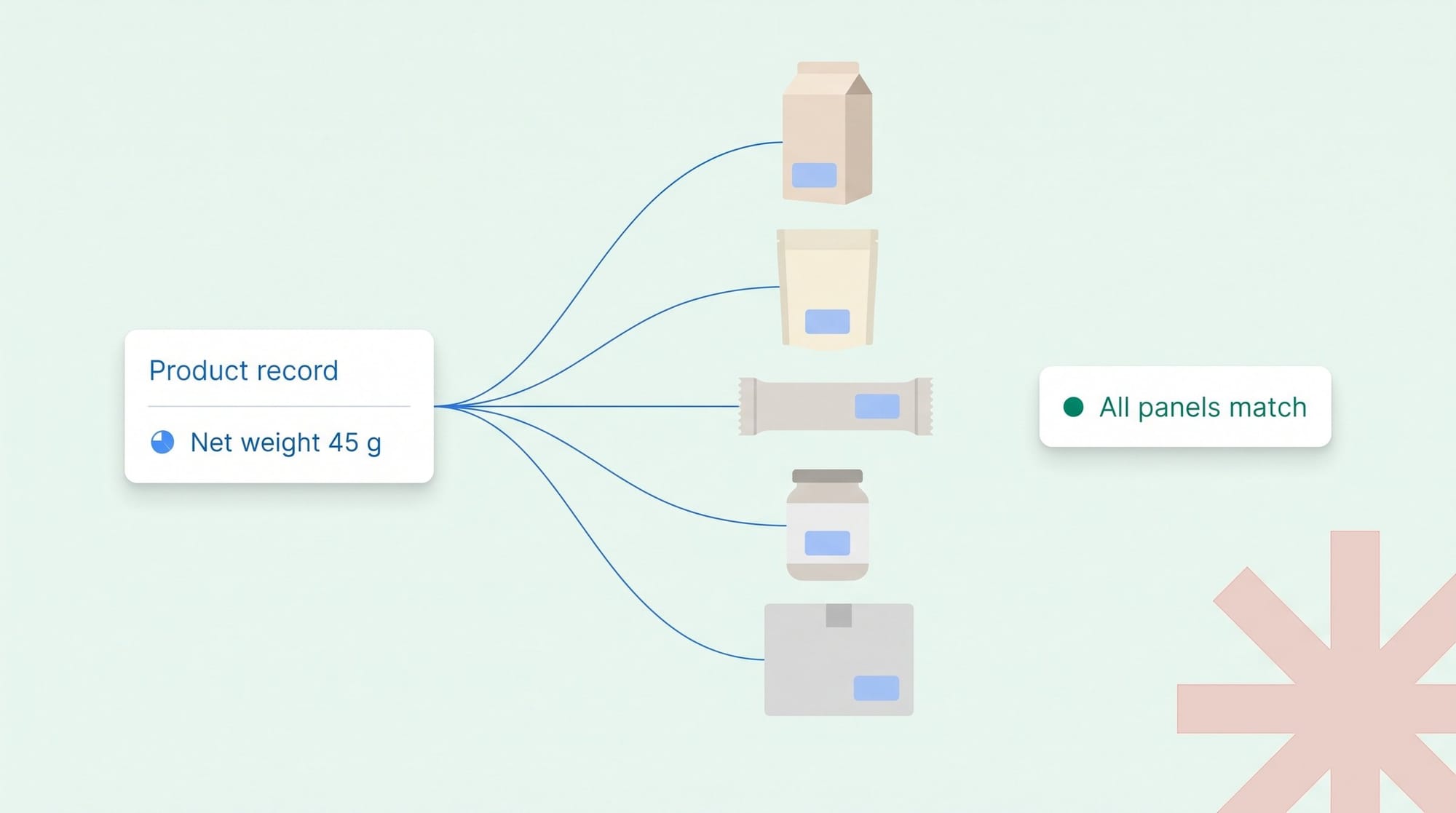
Packaging errors are mistakes on a printed pack that don't match the approved product facts. Think of a wrong net weight, a missing allergen or an old claim. Most of them don't start in design. They start when the spec, the artwork and the approval live in separate places. The label is the first place those facts meet.
I've spent the last few years talking to packaging, regulatory and QA teams at more than 50 food, supplement and beverage brands. When a label goes wrong, the first question is usually "who made the mistake in the artwork?" I think that's the wrong question. In almost every case, the designer typed exactly what they were given. The problem was what they were given.
This piece explains why I see packaging errors as a data problem. It gives you a simple way to test your own process. And it ends with what you can do on Monday.
One number, four versions
Here's an example from our demo brand, Nourish & Co. Their Peanut Butter Crunch protein bar weighs 45 g.
- The spec PDF says 45 g.
- A pack-specs spreadsheet says 40 for the US SKU.
- An email asks, "is it 40 g now after the recipe change?"
- A sticky note says "1.6 oz? check with QA".
The designer picks one. The pack goes out saying NET WT 40g. Nobody was careless. Four people each held a different version of the same fact, and nothing connected them.
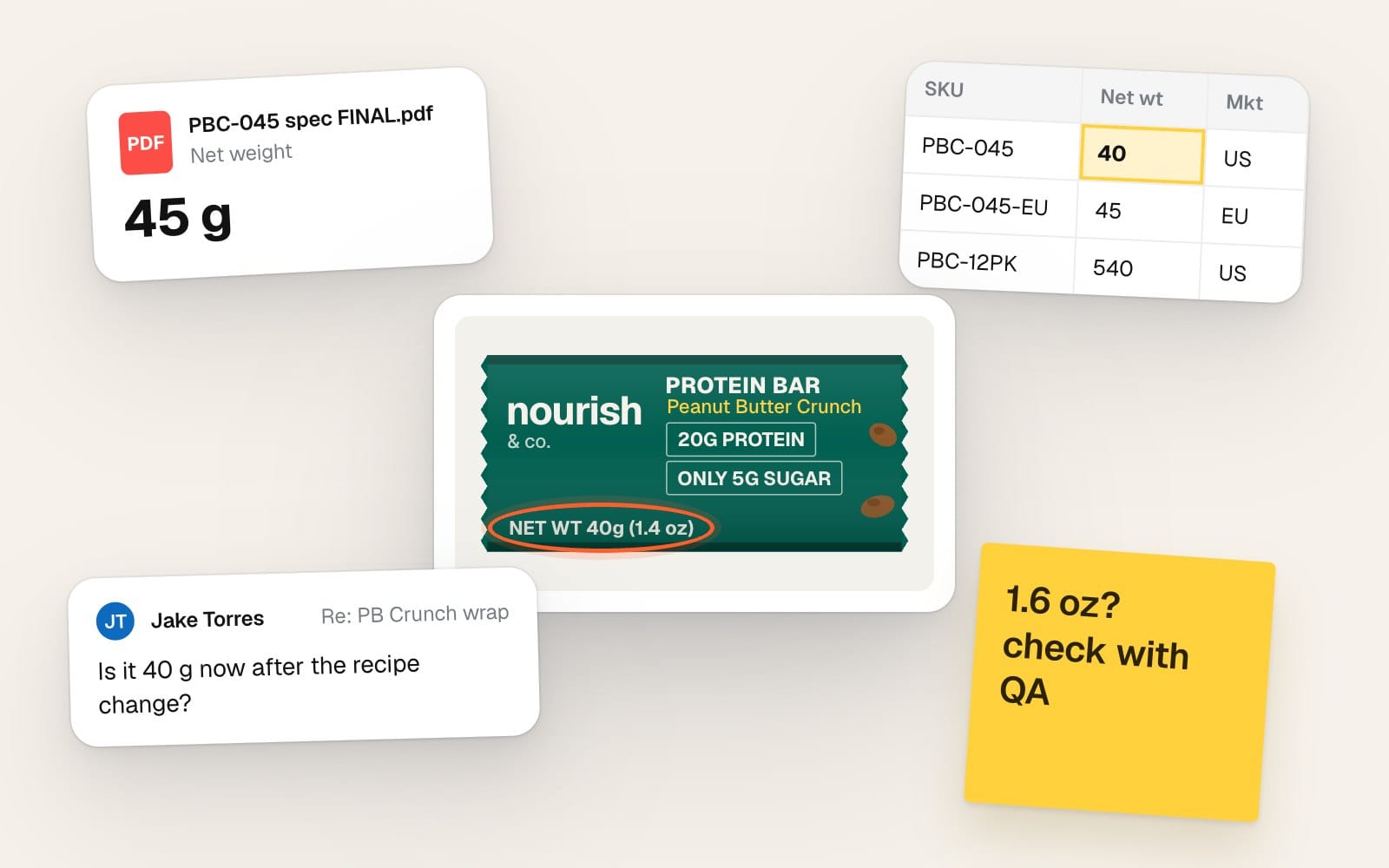
That's what most packaging errors look like up close. It isn't bad design. It's a fact that lived in too many places.
Most brands never got a product system of record
A product system of record is the one place that holds the approved facts for each product: weights, ingredients, allergens, claims, barcodes and who approved them. Every other document should copy from it, not compete with it.
Software vendors often write as if every brand already has one. That doesn't match what I hear. Of the 50+ brands I've spoken to, most run product data and approvals on:
- spreadsheets
- email threads
- OneDrive or SharePoint folders
- tools someone built in-house years ago
Some have a PLM such as Centric, or an ERP such as NAV or Business Central. Even then, the label copy and the approvals usually sit outside it.
Buyers describe this in their own words. One supplement team told us: "You use an Excel list and then you email somebody to make a change and they email you the label back and then you say approved." An IT manager at a food brand described tracking progress by "sending out a group email of who's got this and where's it at right now."
Those teams aren't doing anything wrong. They're doing their best without a system built for the job.
The framework: three disconnected records
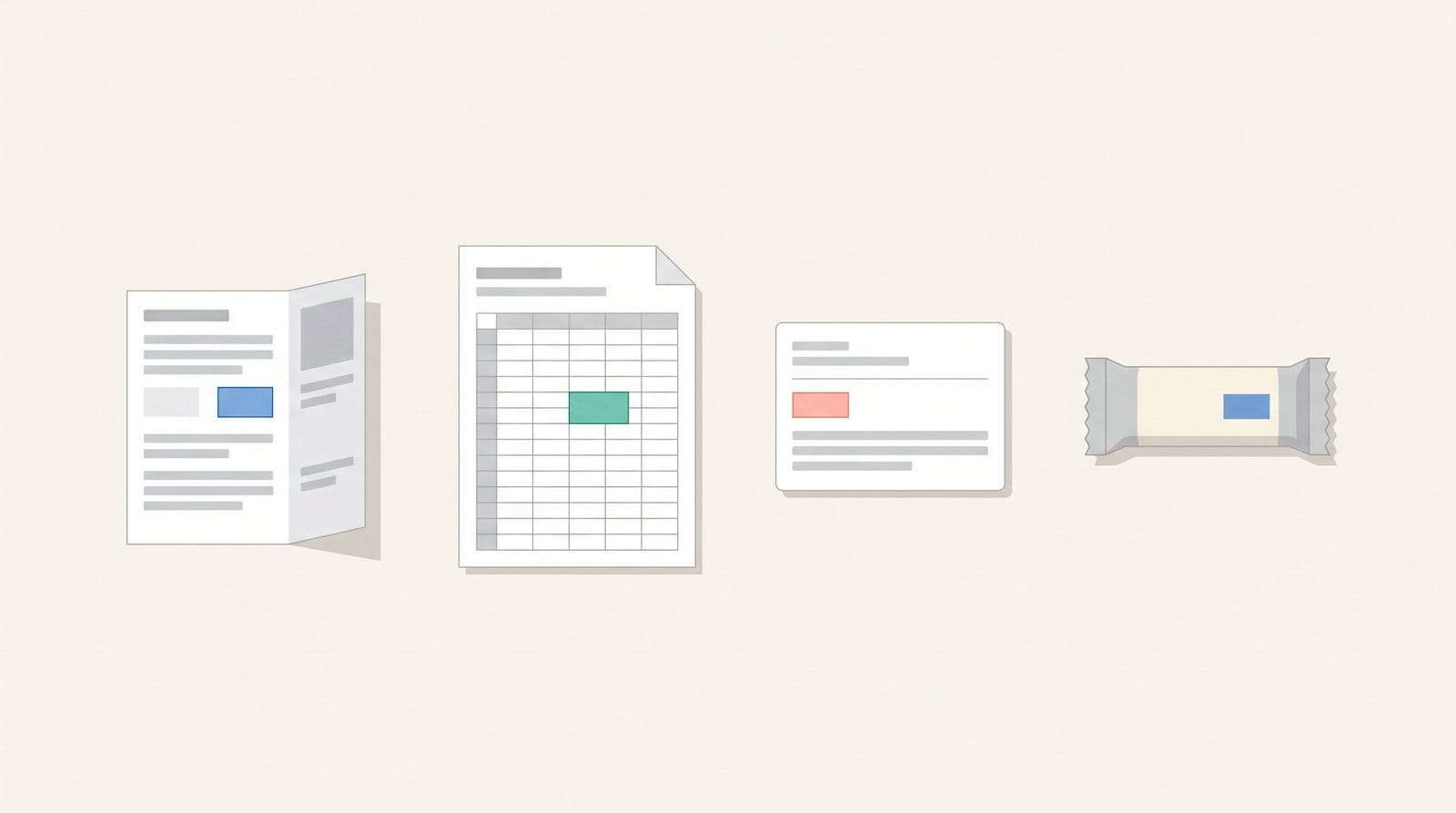
Every label depends on three records. In most brands, each one lives somewhere different.
- The spec record. What the product is: net weight, ingredients, allergens, nutrition, claims.
- The artwork record. What the pack says: the files, the versions and the changes between them.
- The approval record. Who checked what, against which source, and when they signed off.
Here's the short version you can quote: a label is where three disconnected records meet, and a packaging error is what happens when they disagree.
| Record | Where it usually lives | How it goes wrong | What confidence needs |
|---|---|---|---|
| Spec | Spreadsheets, spec PDFs, a supplier email | Two "final" versions. A recipe change that never reached the artwork. | One approved value per SKU, with an owner |
| Artwork | Shared drives, files named FINAL_v3(2) | The wrong file goes to the printer. A change slips in between versions. | One version history, with every change visible |
| Approval | Email replies, a paper checklist, someone's memory | "Approved" with no record of what was checked | Each sign-off tied to the checks and the sources |
Design tools only touch the middle row. That's why better design software doesn't stop the 40 g pack. The mismatch happens between rows, not inside one.
This is about confidence, not speed
Most software in this space sells speed. Faster reviews. Fewer rounds. Speed matters, but it isn't what keeps a regulatory lead up at night.
The people who sign off carry the risk. That means:
- recalls
- FDA warning letters
- retailer chargebacks and pulled stock
- their own name on the approval
What they want is to be able to defend the decision. When a retailer, a regulator or their own CEO asks "how was this checked?", they want to show the answer, not remember it.
So I'd define packaging confidence like this: the ability to show, for any label, which checks were run, which sources they were checked against, and who approved what and when. It's visible evidence, not a feeling.
Buyers say the same thing in plainer words. One buyer told us they want "checks and balances to catch us before we make a mistake." Another reviewer told us: "Once we've looked at the same package six times, my brain starts to speed past all of it." That second quote matters. A person re-reading version six of a nutrition panel isn't a reliable check. That's not a skills issue. It's how attention works.
Machines find. People decide.
This is where software can help without taking over. My rule is simple: machines find; people decide.
A machine is good at the boring comparison. Does the net weight on the artwork match the approved spec? Did the claim row move between version 2 and version 3? Is the allergen statement there?
A person is good at judgement. Is this finding real? Does the claim need a lawyer? Is this ready to print?
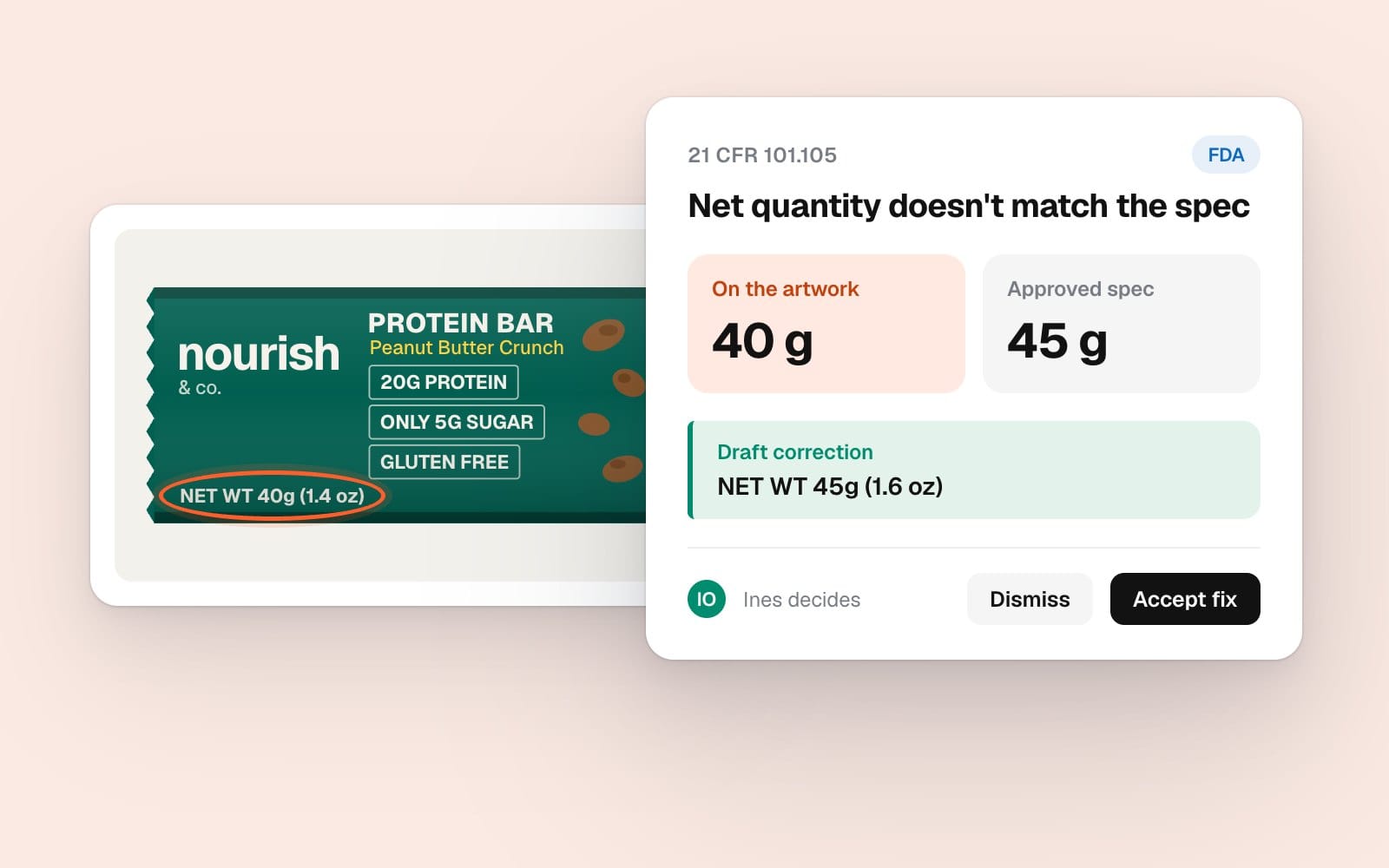
Here's how that works in GoVisually today:
- Product Hub holds the approved facts for each SKU. You can import them from the spreadsheet you already have.
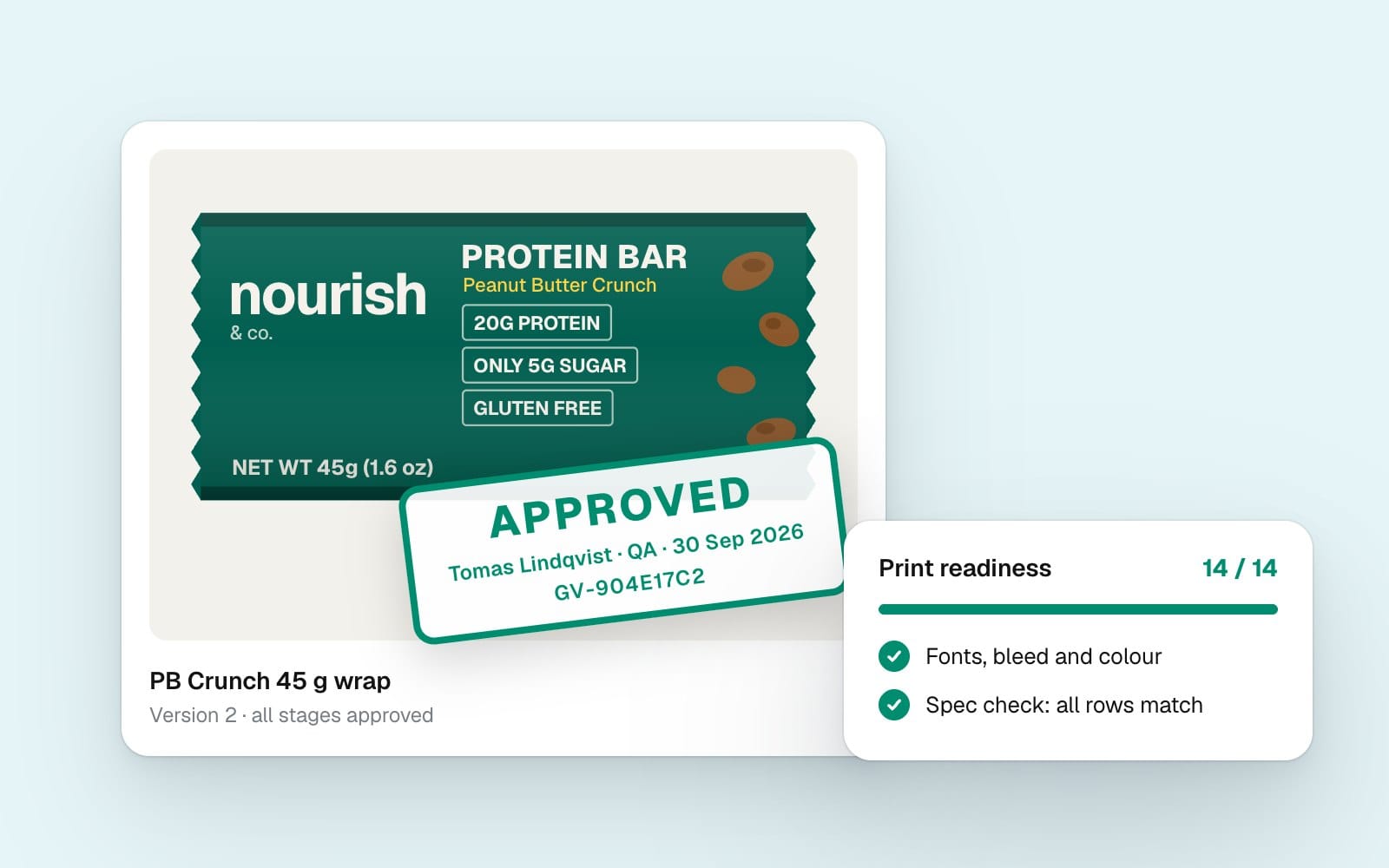
- The spec check reads the artwork against the attached spec. It lists every row, including the ones that pass. Each mismatch comes with the text it found.
- Multi-stage review workflows route each proof through brand, regulatory and QA in order, and record every sign-off. (Custom plans.)
Our Intelligence Engine does the finding. Your team makes the call. Every finding is something to verify, not a verdict.
Where this goes next
I don't think the answer is asking every brand to buy a big PLM first. Most won't, and many can't. The answer is to build the system of record from what brands already have.
The best place to start is the approval checkpoint. Every label already passes through it. It's the one moment when spec, artwork and sign-off are all on the table. If you capture the facts there, cleanly, the system of record builds up one approved label at a time.
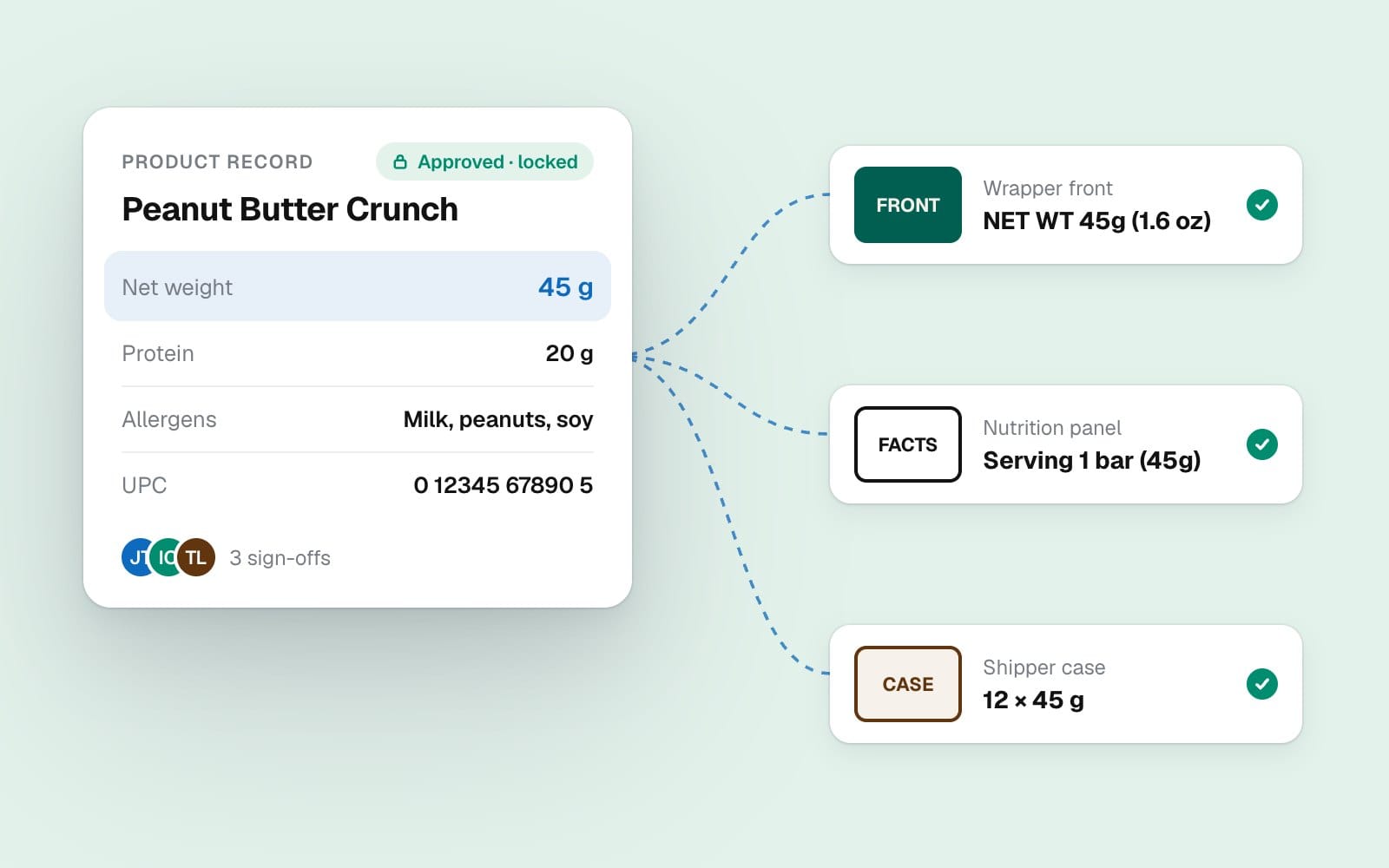
From there, the direction is one connected platform:
- product data
- artwork
- checks
- approval
- marketing content
Each step reads from the one before it. An intelligence layer sits across all of them. It spots where the records disagree and shows a person the evidence.
We've seen what connecting even part of this does. NutraBio cut label review from six weeks to three days. That's the speed benefit. The bigger change is that their team can show how each label was checked.
What to do on Monday
You don't need new software to start. Pick one live SKU and do this:
- ☐ Find every copy of one fact. Search your drives and inbox for the net weight. Count the places it lives.
- ☐ Name one owner per fact. One person approves the spec value. Everyone else copies it.
- ☐ Pick one spec file as the source. Mark it clearly. Archive the others.
- ☐ Check the artwork against the spec, line by line. Use the spec, not the last proof.
- ☐ Write down what each approver checked. "Approved" alone isn't evidence. "Checked net weight and allergens against spec v4" is.
- ☐ Ask the four questions before the next sign-off: Which spec? Which version? Which checks? Who approved?
If you can't answer those four questions in a minute, the risk isn't in your design. It's in your data.
If you want a head start on the spec side, our free Product Label Maker turns product notes into a label layout, and the Nutrition Label Maker builds a panel from one set of values. For the review side, see our guide to building an artwork approval process. For what's at stake when allergens slip, read three food recalls that cost brands millions and our allergen labeling guide.
FAQs
What causes packaging errors?
Most packaging errors come from disconnected data, not bad design. The spec, the artwork and the approval sit in separate files, spreadsheets and emails. When one changes and the others don't, the label ends up with a wrong weight, a missing allergen or an old claim.
What are the most common labeling errors on food packaging?
The usual ones are undeclared allergens, a net quantity that doesn't match the product, nutrition values out of date after a recipe change, unsupported claims and barcode problems. Undeclared allergens are among the most common reasons for food recalls in the US.
What is a single source of truth for packaging?
It's one approved record per product that every label, spec sheet and listing copies from. It holds the facts, such as weight, ingredients, allergens and claims, plus who approved them and when. If two documents disagree, the source of truth wins.
Do I need a PLM system to prevent packaging errors?
No. Many brands don't have one, and PLM rarely covers label copy and approvals anyway. What you need is one owned value per fact, a check of the artwork against that value, and a record of who approved it.
How do you prove a label was checked before print?
Keep evidence, not just an "approved" email. For each label, record which spec version was used, which checks were run, which rules they were checked against, and who signed off and when.
Can software replace the person who approves a label?
It shouldn't. Software is good at finding mismatches between the spec and the artwork. A person should still review each finding and make the final call. Machines find; people decide.
If you want to see the spec check and staged sign-off on your own labels, start a free GoVisually trial.
Disclaimer: This article is general information, not legal or regulatory advice. Rules and product features change, and we can get things wrong. Check the current rules with the relevant regulator or a qualified adviser before you print. Last checked: November 2026.